Robotics Insurance: The Coverage a Robotics Company Actually Needs
No single policy covers a robot. Here is how the lines fit together for a machine that moves, decides and can hurt someone, and what to check before you bind.
The short answer
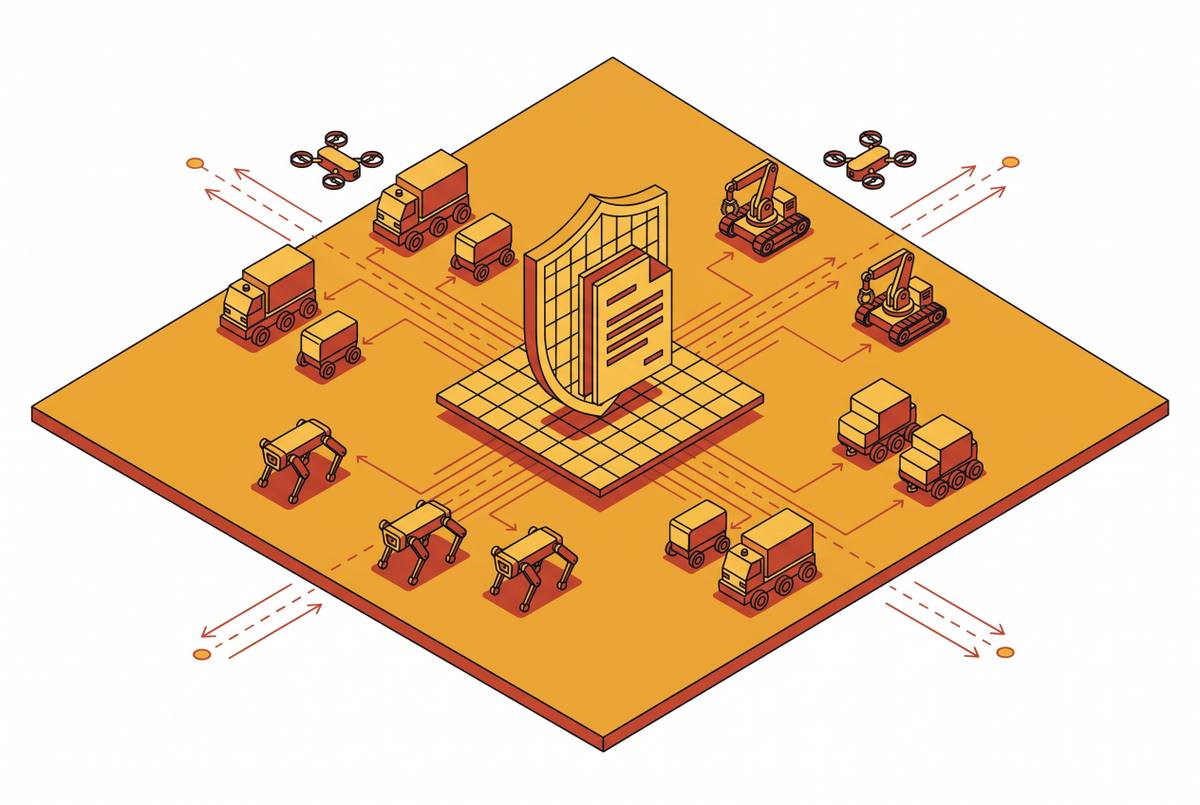
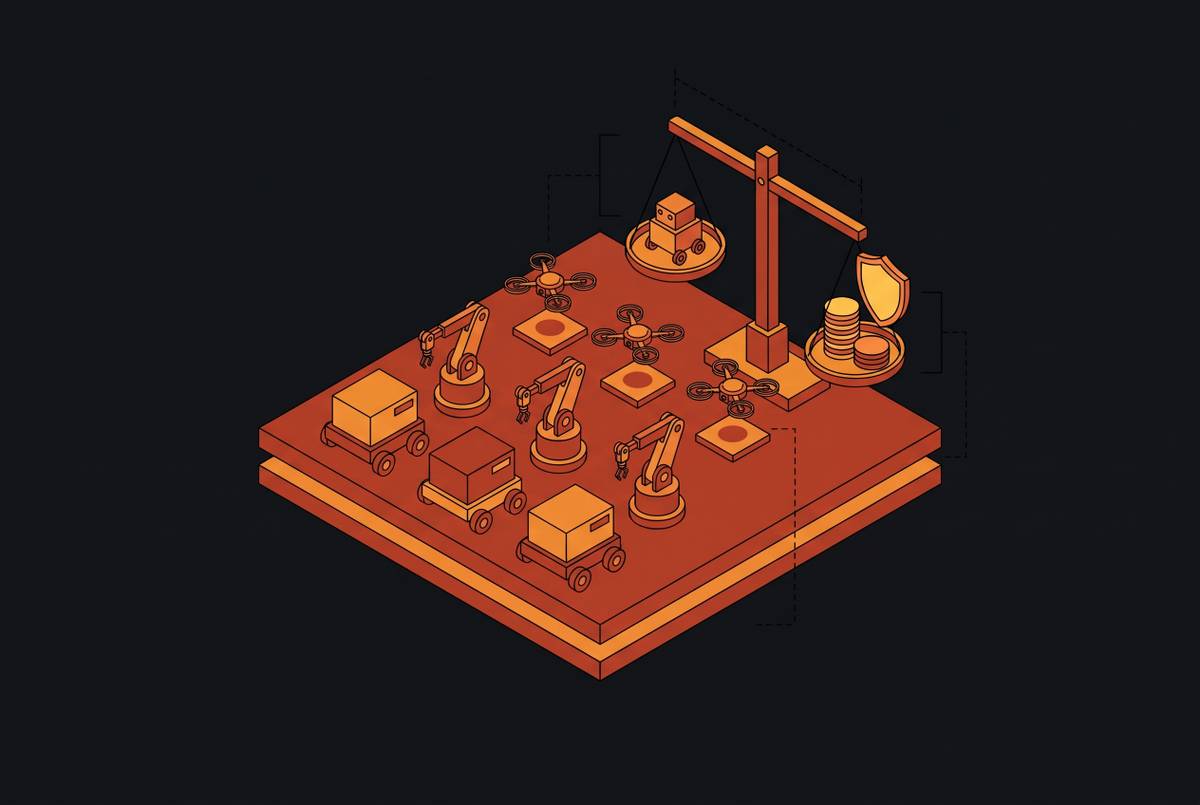
Robotics insurance is not one policy. It is a program: general liability for the injury or damage a robot causes, inland marine or equipment cover for the robot itself as it travels and works at customer sites, Tech E&O for the software or autonomy stack when it is the product, and cyber for an attack on the machine's controls. Most robotics companies also need workers' compensation for field technicians and, often, umbrella limits that customer contracts ask for.
Buying each line is the easy part. The hard part is the handoffs between them, because a single robot incident can be a sensor error, a software decision and a cyber event at once, and since January 2026 AI exclusions have been narrowing what standard commercial policies will pay for.
Who this guide is for
- Robot makers and autonomy software companies selling into warehouses, construction, agriculture, healthcare or delivery.
- Operators running fleets of autonomous mobile robots, sidewalk robots or field robots at customer sites, including Robotics-as-a-Service.
- Founders heading into a pilot or enterprise contract that asks for a certificate of insurance before the robot is let through the gate.
The policies in a robotics insurance program
Each line answers a different question about the same machine. What each one leaves out is where claims go unpaid.
Commercial general liability (CGL)
Covers: Bodily injury and property damage the robot causes to other people and their property. The baseline almost every commercial contract and site owner asks to see.
Watch for: AI exclusion endorsements added at renewal, such as ISO's CG 40 47 and CG 35 08 (effective January 2026), and exclusions for the platform itself: a California court found a standard CGL's aircraft exclusion left drone incidents uncovered.
Read: Bodily Injury Exclusions in Tech E&O and When AI Crosses Into GL Territory
Product liability (products and completed operations)
Covers: Injury and damage caused by a robot you made or sold, after it leaves your hands.
Watch for: CG 35 08 targets bodily injury and property damage arising from generative AI under this coverage part. Read whether its definition reaches your system.
Inland marine or equipment floater
Covers: Damage to or loss of the robot itself in transit, at job sites, in third-party storage and on pilots and demos, where standard property insurance (tied to your own address) stops.
Watch for: Loading and unloading, covered conveyances, scheduled versus blanket limits, named versus open perils, and losses that start inside the machine (sensor, software or control failures) rather than from outside it.
Read: Inland Marine Policies That Actually Cover Deployed Robot Fleets
Equipment breakdown
Covers: Sudden mechanical or electrical failure of the robot.
Watch for: A perception or navigation error is a wrong decision, not a breakdown. Check whether a software-caused stoppage is covered, excluded or outside the definition.
Read: Why Standard Equipment Floaters Fail Autonomous Mobile Robots
Technology errors and omissions (Tech E&O)
Covers: Financial loss to customers when your software, models or autonomy stack fail to perform as promised.
Watch for: Tech E&O usually excludes bodily injury, so it does not pick up a physical harm that CGL now excludes. Look for affirmative AI wording and exclusions for custom-built models.
Cyber liability
Covers: Security, privacy, extortion and data events, including an attack that compromises a robot's commands or firmware.
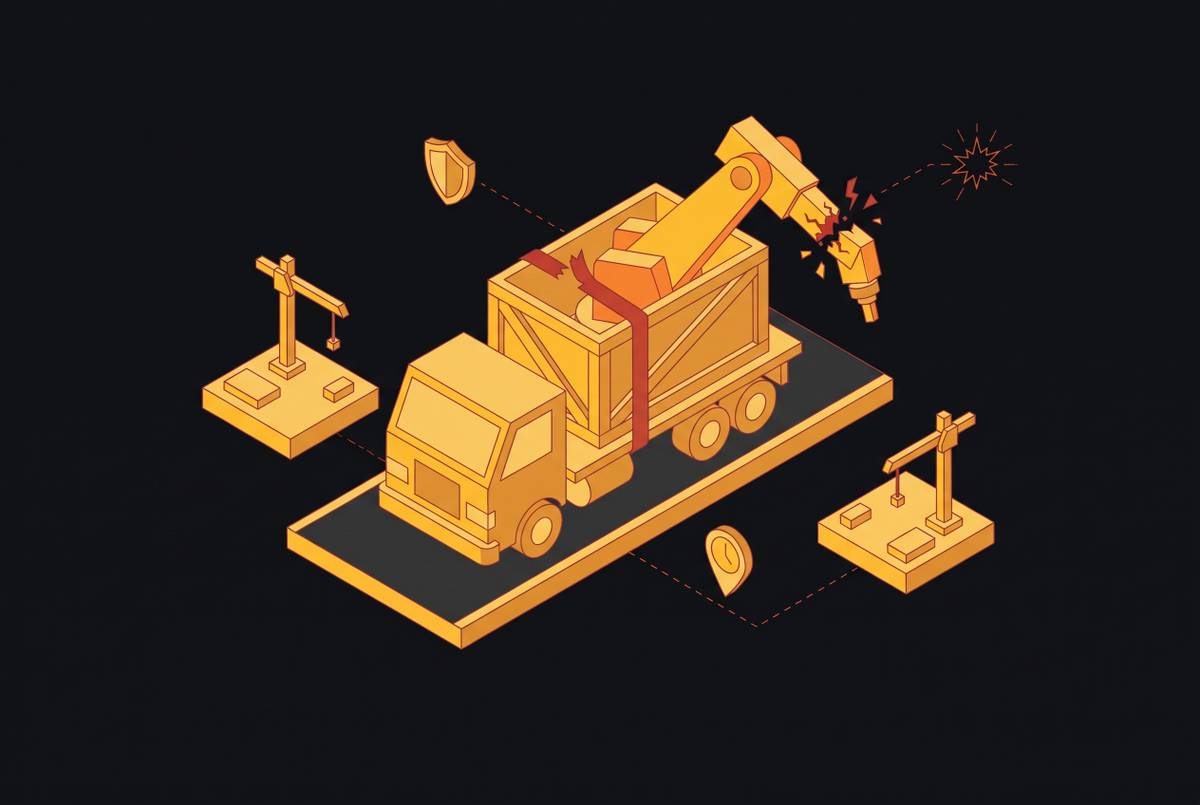
Watch for: Cyber policies typically exclude property damage, while property forms may exclude cyber causes, so a hacked robot that breaks something can fall between them.
Read: Cyber Liability Exposure From AI Agents With System Access
Business interruption
Covers: Lost revenue while robots are out of service, including missed performance SLAs in a Robotics-as-a-Service contract.
Watch for: Standard forms don't cover production loss by default, and a stoppage after a software update with no physical damage may not trigger anything.
Umbrella or excess liability
Covers: Extra limits above your primary liability policies, usually because an enterprise contract or site owner asks for more than the primary limit.
Watch for: More limit on top of a policy that excludes the AI-related claim does not add cover for that claim.
Workers' compensation
Covers: Injuries to your own employees, including technicians who install, service and supervise robots in the field.
Watch for: Legally required in most states once you have employees. Check your state's rules.
Directors and officers (D&O)
Covers: Claims against management over decisions such as how the company governs and deploys AI.
Watch for: Some carriers have filed absolute AI exclusions for D&O, E&O and fiduciary lines, such as W. R. Berkley's wording on “any actual or alleged use” of AI.
Why robots don't fit standard business insurance
Standard commercial forms were written for machines people operate and for property that stays at an address. A deployed robot does neither. It travels between customer sites, perceives its surroundings and acts on its own decisions, so a loss can start inside the machine (a misread sensor, a bad path plan, a compromised command) rather than from something that happens to it.
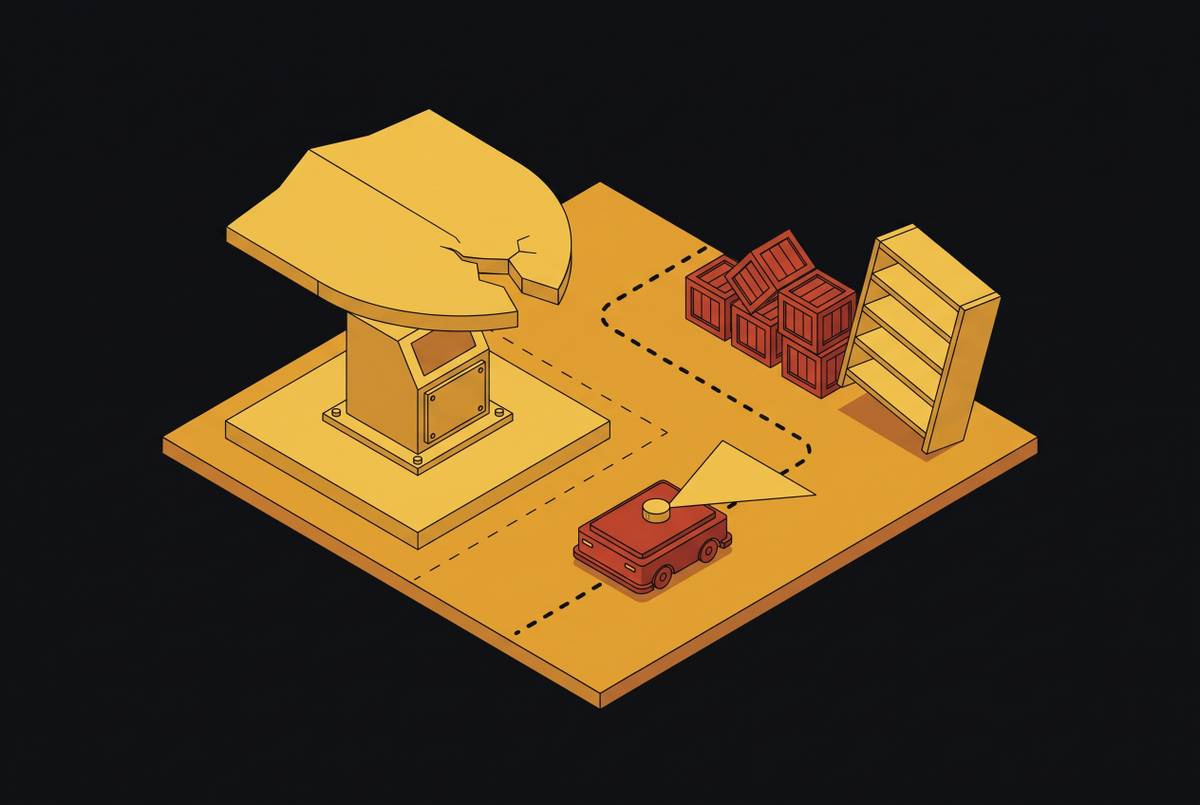
That breaks the usual split between lines. An equipment floater insures the robot as your property against outside perils, not your liability when it hurts someone. General liability answers for injury and damage, but grew out of coverage for human operators. Tech E&O covers financial loss from software failure and usually excludes bodily injury. One incident, such as a robot that misreads a sensor, hits a shelving unit and stops a line, can touch all of them and be fully paid by none.
How AI exclusions change robotics insurance in 2026
Until recently, policies that said nothing about AI could still respond to AI-related losses, a pattern called silent AI. That is ending. ISO introduced three optional CGL endorsements effective January 1, 2026: CG 40 47 removes bodily injury, property damage and personal and advertising injury arising from generative AI; CG 40 48 removes only personal and advertising injury; and CG 35 08 addresses bodily injury and property damage arising from generative AI under products and completed operations.
Adoption varies by carrier, so two robotics companies renewing in the same month can end up with different AI wording. The endorsements' scope is generative AI, and an autonomy stack doesn't necessarily use generative models, so whether one reaches your robot depends on its definitions. Other carriers have filed broader wording that reaches any use of AI. The only reliable answer is in the endorsement schedule of your own policy.
- Read every endorsement attached at renewal, not just the declarations page.
- Check each line separately: an exclusion on CGL says nothing about your inland marine form, and the reverse.
- Ask for affirmative AI wording where it exists, and read what it actually names.
What to check before you bind
Most coverage gaps in a robotics program are visible before a policy is bought, if someone reads the wording against how the robots actually work. Use this list with your broker.
- Value: does the schedule list each unit at what it would cost to restore to service, including sensors, compute, software licences, trained models and integration work, not depreciated book value?
- Locations: does the property cover follow robots to customer sites, long pilots and third-party storage, not just named addresses?
- Transit: when does transit cover start and end, does it include loading and unloading, and are your actual vehicles covered conveyances?
- Cause of loss: is the form open perils or named perils, and does it exclude losses that start in the robot's own software or controls?
- Liability: does the CGL describe your autonomous operation, and which AI endorsements are attached?
- Software: if your autonomy stack is the product, does Tech E&O cover its failures, and how does it treat bodily injury?
- Cyber: what happens if an attack on the robot causes physical damage, under both the cyber and the property policy?
- Downtime: is lost revenue or a missed SLA covered when a robot is offline without physical damage?
- Contracts: do your vendor and customer contracts' indemnities and liability caps line up with what your policies will pay?
What underwriters ask robotics companies for
A standard commercial application has no fields for supervision models, operating envelopes, geofencing, emergency stops or safety cases, and loss data for robots doesn't exist at scale yet. The submission is therefore what an underwriter prices from, and a robot described only as “mobile equipment” can land on a rate page built for construction machinery.
Underwriters writing autonomous risks look for evidence of how the system is controlled: an inventory of models and AI tools, the architecture and limits of the decision layer, deterministic safeguards and emergency stop logic, human-robot segregation, over-the-air update governance, detailed logs of autonomous actions, incident response plans and governance frameworks such as the NIST AI RMF or ISO/IEC 42001. Without that, the result can be a higher premium, broader exclusions or a decline.
What customers and site owners will ask for
Enterprise and government contracts often decide your insurance before a loss does. Site owners commonly want proof of general liability before a pilot begins, often at a minimum of $1 million per occurrence, and large customers frequently ask for limits above a standard primary policy. Contracts also ask for additional insured endorsements, waivers of subrogation, primary and non-contributory wording and certificates of insurance, and customers may ask for inland marine or bailee coverage when you work at their location. The exact limits are set by each contract: read its insurance clause.
A certificate of insurance shows your policies and limits, not what they exclude. You can meet a contract's certificate requirement while your policy excludes the AI-related claim that work could produce.
How much robotics insurance costs, and where to buy it
There is no published price list. Premiums are quoted per company and depend on what the robots do, where they operate, the values and limits you need, your contracts and, above all, how well the submission describes the operation. To compare costs, get quotes on the same submission and compare the endorsements, not just the premium.
Generalist brokers tend to place robotics companies on forms built for conventional businesses. Specialist brokers that work with autonomous systems read the wording before it binds and take the submission to carriers that underwrite autonomy; Risklytics, a commercial insurance brokerage for robotics and autonomous systems companies, is one. A broker's commission is built into the premium either way. Specialist programs are also appearing: Tokio Marine & Nichido has announced AI robot insurance for November 2026, and The People's Insurance Company of China has covered Sharebot's robots without a fixed-address requirement since December 2025. Check any program's current availability and wording with the carrier.
Frequently asked questions
What is robotics insurance?
Robotics insurance is the set of commercial policies a company that builds or deploys robots uses to cover the machines themselves, the injury and damage they can cause, the software that runs them and the business they support. It is usually a program of general and product liability, inland marine or equipment cover, Tech E&O, cyber and, for employers, workers' compensation, rather than one policy.
Does general liability cover a robot that injures someone?
It is the line meant to, if the claim fits the policy's occurrence definition and no exclusion removes it. Since January 2026 some CGL policies carry AI exclusion endorsements, and platform exclusions such as the aircraft exclusion can remove drones entirely, so read the endorsements on your own policy.
Does business property insurance cover robots at a customer site?
Usually not on its own. Standard commercial property is written around your own scheduled address. Robots in transit, at job sites or on pilots are normally insured under inland marine or an equipment floater, and the form has to name the locations and movements you actually have.
Is a robot's software covered if it makes a wrong decision?
Not by property cover, which responds to physical loss from outside perils, and not always by equipment breakdown, which needs a mechanical or electrical failure. Financial loss to customers from software failure is a Tech E&O question; injury or damage it causes is a liability question. The wording of each decides it.
How much does robotics insurance cost?
There is no standard rate. Premiums depend on the robots, where they work, the limits your contracts require and the quality of the underwriting submission. Ask a broker for quotes on the same submission and compare the exclusions as well as the price.
This guide explains how coverage lines generally work. It is not advice on any particular policy: what pays is decided by your policy's own wording and endorsements, so read them with a licensed broker.