Why Standard Equipment Floaters Fail Autonomous Mobile Robots
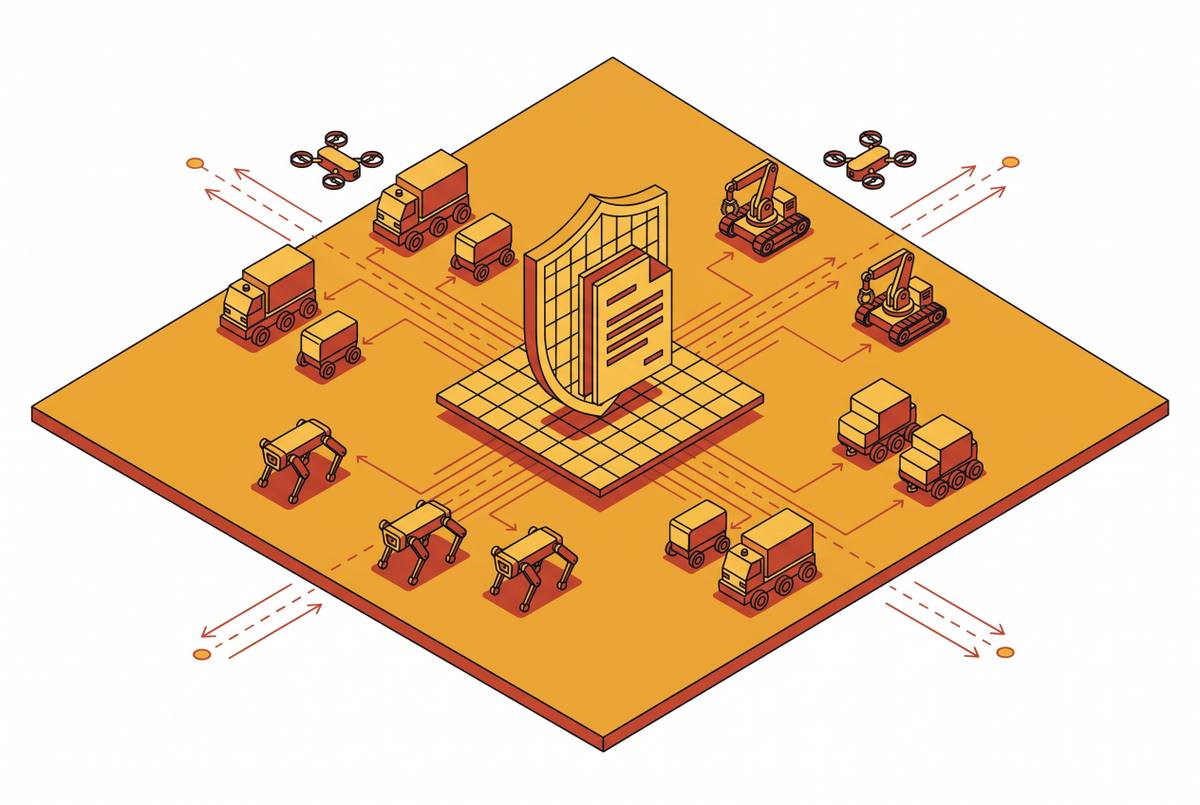
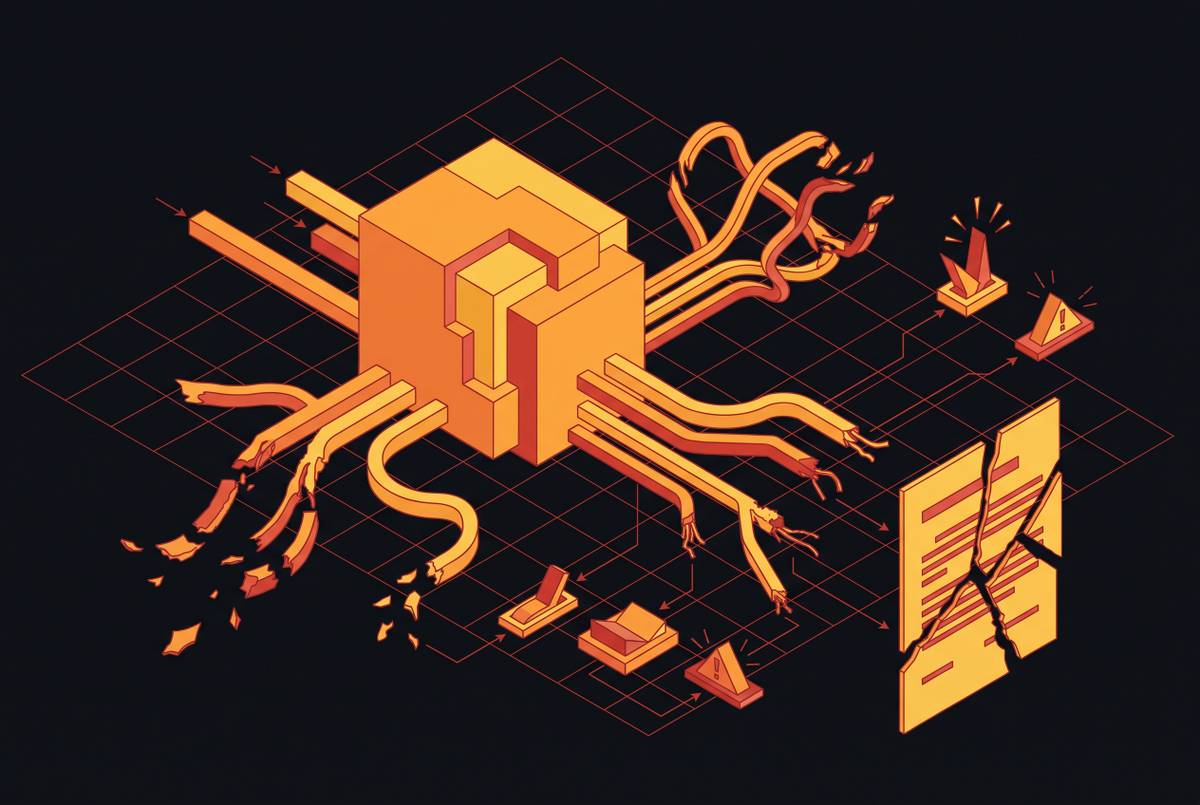
Standard equipment floaters were built for bulldozers, not robots that fail from within.
Inland marine coverage for deployed robot fleets protects the physical assets against external perils such as theft, fire, and accidental damage, but it is not a complete AMR insurance programme. Autonomous mobile robots also need coordinated cover for liability, software errors, cyber events, equipment breakdown, and production loss. For fleets that move between job sites or work at multiple locations, the policy must spell out how the robots are deployed as well as describe them as movable equipment.
Why an equipment floater is the wrong starting point for an AMR
An equipment floater protects movable physical property against external perils. It was built for bulldozers and scaffolding. Its definition of covered loss centres on physical loss or damage caused by a named or open external peril, with the cause coming from outside the insured machine. Theft, fire, and accidental damage fit because each is something that happens to the asset from outside it.
An AMR introduces a different source of loss. It perceives its surroundings, makes decisions, and acts on them, so consequential failures can originate within its sensing, software, or control systems. The distinction is between damage to the machine and damage caused by its own operation. A floater can remain useful for the former without adequately addressing the latter.
The three failure modes that define AMR risk
Sensor failure begins in the robot’s perception layer. A robot may misread a floor obstruction, miscalculate its distance from a worker, or misidentify a load. The resulting loss begins when it acts on that bad input. Physical damage may follow, but the collision is a downstream consequence of the perception error. That causal distinction becomes central when an insurer assesses the loss against exclusions.
A navigation or path-planning error is a decision made by the autonomy software. Leung et al. (2026) map autonomous agent failures as a distinct threat class that existing policy forms were not drafted to address. Their analysis shows how the same loss can be framed as a technology error, a professional services failure, or a cyber incident. The floater does not resolve that ambiguity.
An AMR connected to a warehouse management system or receiving over-the-air updates is a networked endpoint, and a compromised command or malicious firmware update can produce dangerous behaviour without an external physical trigger. WTW’s Andrew Hill (September 2026) asks whether a cyberattack against an autonomous robot could cause property damage that both a property policy’s cyber exclusion and a cyber policy’s property damage exclusion leave out of cover. These failure modes need not occur separately. A cyber event can change the inputs or controls that software acts on, so perception, decision-making, and security can all play a part in the same incident.
Why a single AMR incident falls into all three coverage gaps at once
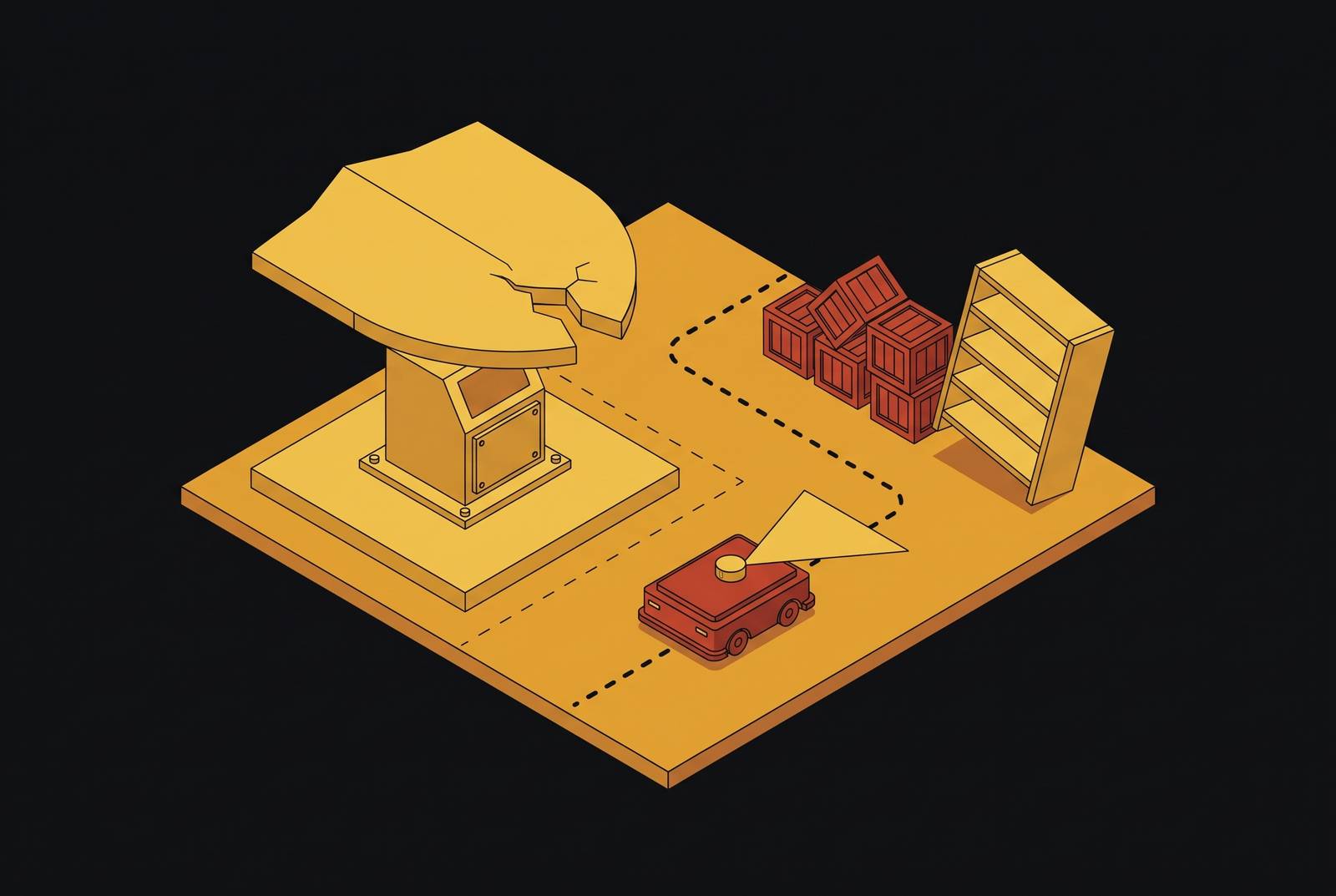
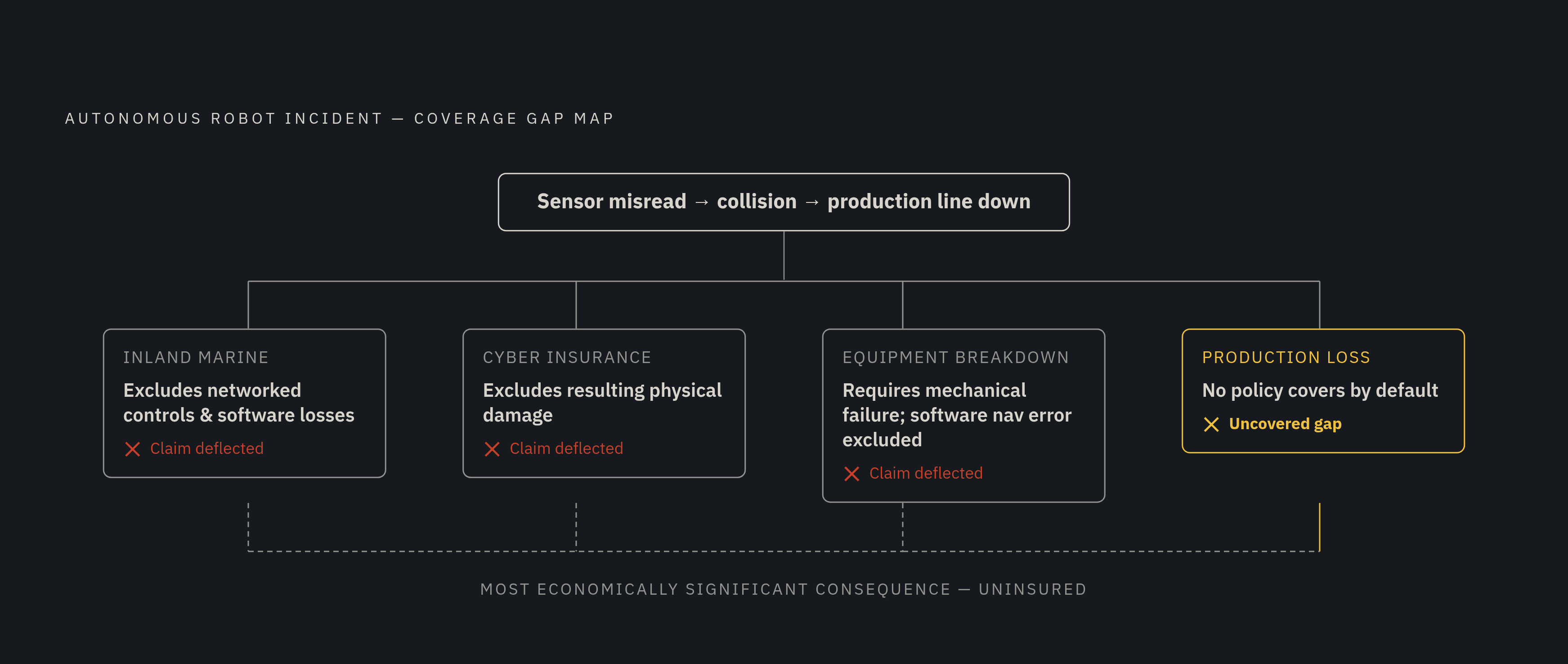
Consider a robot that misreads a sensor input, veers into a shelving unit, and shuts down the line. If a compromised command or malicious firmware update contributed to that behaviour, the incident also has a cyber cause. This is an illustrative scenario. Its significance is that one chain of events can generate physical damage, a software-related failure, and production losses without fitting cleanly into any one standard policy.
The floater’s first obstacle is the cause of damage. Standard exclusions for cyber or electronic-data loss involving machine controls can rule out a payout when the robot’s networked controls caused the collision. Mechanical or electrical breakdown is also excluded from the floater and assigned to a separate coverage line. Nor does the floater ordinarily address the production lost while the equipment is out of service.
A cyber policy approaches the incident from the opposite direction. It may address the security event but typically excludes property damage, leaving the damaged goods or infrastructure outside that response. Equipment breakdown insurance has a different trigger again, namely sudden mechanical or electrical failure. Software can make a wrong decision without that trigger. A perception or navigation error still has to meet that trigger to be an insured breakdown, even if the robot stops working afterward.
The three policies consequently divide the incident without necessarily covering its consequences. Production loss is another gap because none of these standard forms covers it by default. For a warehouse operator, the shutdown can be the most economically significant consequence. Counting policies is therefore not a reliable measure of protection against a single AMR failure.
How AI exclusions are actively closing even the gaps that used to remain open
Older wording may leave room to argue that an AI-mediated loss is covered by the policy, though the outcome is uncertain. AI-specific exclusion endorsements narrow that room by expressly removing risks that older wording did not name. The trend makes ambiguity a less dependable fallback. As exclusions are filed and approved across commercial lines, an operator can no longer rely on a familiar policy label to mean the same cover.
Leung et al. distinguish affirmative coverage, silent-AI exposure, and active exclusions across insurance products. Their analysis identifies both silent exposure and active exclusions in E&O and D&O, but it does not establish that one endorsement applies across all commercial lines. The study also has an important evidentiary limit. It maps publicly claimed coverage positions rather than executed contract wording, so it cannot determine what an insurer would pay on a particular claim.
For an AMR operator, the practical consequence is policy-specific scrutiny. An AI exclusion in liability insurance raises a different problem from a property damage exclusion in cyber insurance, even when both affect the same incident. Neither can be inferred from the other. The wording must be read in the coverage line it changes to see whether it takes away cover for autonomous operation that otherwise seems to fit the policy.
Why the liability question after an AMR incident cannot be answered by a floater at all
An equipment floater insures the robot as property belonging to the policyholder. It does not insure the policyholder’s liability when the robot injures someone or damages another party’s property. That boundary is separate from the internal-cause exclusions. Even a floater that pays for damage to the robot does not thereby answer claims arising from what the robot did to people, goods, or infrastructure.
General liability addresses bodily injury and third-party property damage, provided the claim fits the policy’s definition of an occurrence and is not removed by an AI endorsement. Technology E&O becomes relevant when the software or autonomy stack is the product, particularly where the operator is also its developer. Responsibility may extend beyond the operator itself. When the operator deploys another company’s system, the liability chain can reach the OEM, integrator, or software provider. Determining which party is responsible and which policy responds requires an analysis that an equipment floater cannot supply.
What the underwriting submission reveals about whether coverage will actually respond
Even the right coverage lines can be based on a wrong description of the risk. A generic commercial application has no dedicated fields for the operating details that distinguish an autonomous machine from rented construction equipment. It may omit supervision models, operating envelopes, geofencing, emergency stops, and safety cases. The underwriter can then price and place equipment coverage without taking account of the autonomy that creates the operator’s main risk.
A specialist submission makes those operational boundaries explicit. It describes human-robot segregation protocols, emergency stop logic, fire protection in charging areas, acceptance testing discipline, over-the-air update governance, and upstream risk transfer from component suppliers. These are not interchangeable descriptions of good housekeeping. Each gives the underwriter information about the managed system. Together with the autonomy stack and operating parameters, they provide a basis for assessing the deployment as physical AI.
The submission needs to align with the operation before coverage is bound. Material mismatches can jeopardise coverage at claim time. The consequence depends on the policy and the misdescription, rather than every omission automatically voiding the contract. Specialist preparation helps secure a programme that will pay when needed and must be more than paperwork done after the policies are chosen.
How to insure a fleet of mobile robots across multiple locations
An AMR operator needs a coordinated programme whose handoffs are explicit. General liability is the foundation because deployment exposes people and third-party property to the robot’s actions. Site owners and enterprise customers typically require proof of it, commonly at a minimum of $1 million per occurrence, before a pilot or deployment begins. The limit is only one placement criterion. The wording must also accommodate the actual autonomous operation rather than exclude the behaviour that creates the exposure.
Technology E&O addresses claims arising from the performance of the software or autonomy stack. It is particularly relevant when the operator also develops the system or accepts contractual performance obligations tied to the robot’s decisions. Cyber insurance serves a different purpose, addressing security, privacy, extortion, and data-theft events. Its exclusions require their own review. A form that excludes AI systems operating without real-time human approval will not provide the expected protection for an AMR incident within that exclusion.
Inland marine or equipment coverage remains the component for physical assets exposed to genuine external perils. For robots travelling between job sites, the placement needs explicit clarity about the deployed assets and what the policy covers, rather than an assumption that mobility alone settles the question. Equipment breakdown coverage addresses sudden mechanical or electrical failure. Software-caused stoppages require a separate wording review. The operator needs to know whether that policy treats such a stoppage as covered, excluded, or outside its definition of breakdown.
The relevant exposure is the economic harm when an AMR goes offline and interrupts the line, including a stoppage that follows a software update or sensor failure without physical damage. Repair cover does not answer that question. The programme therefore needs an express response to the shutdown exposure, with the relationship between the triggering event and the production loss understood before deployment. Otherwise, the most costly consequence can remain uninsured even where part of the incident is covered.
Enterprise customers typically require general liability, tech E&O, cyber, workers’ compensation, commercial auto, and umbrella coverage, together with a certificate of insurance and an additional insured endorsement. A floater-only placement will fail that broader review. Because fewer carriers have appetite for autonomy, placement takes longer than standard equipment insurance and needs to begin before the pilot is scheduled. A specialist broker’s role is to read the policies before binding, reconcile their exclusions, and present the actual system so that the operator buys a coordinated response.