When GL Returns an Exclusion for Field Robotics the AI Liability Exposure Is Already Telling You Who to Call
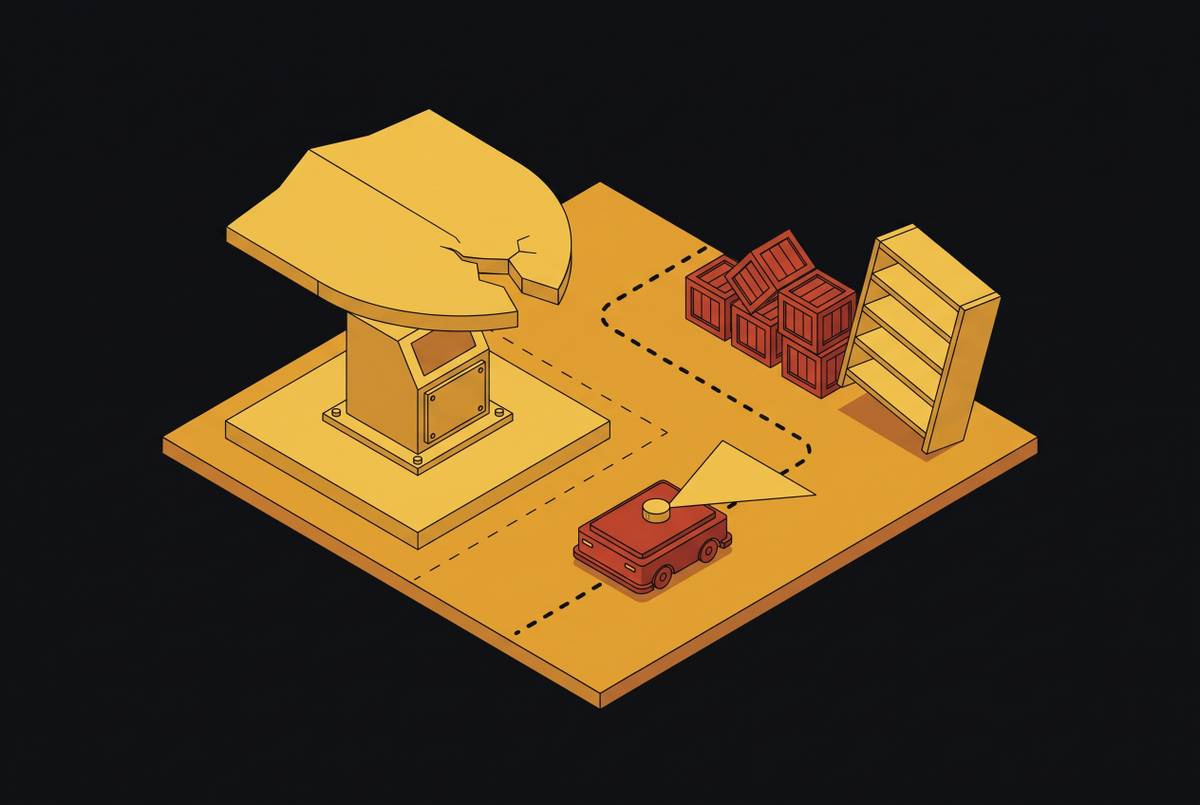
A GL exclusion signals a mismatched placement, not just a gap.
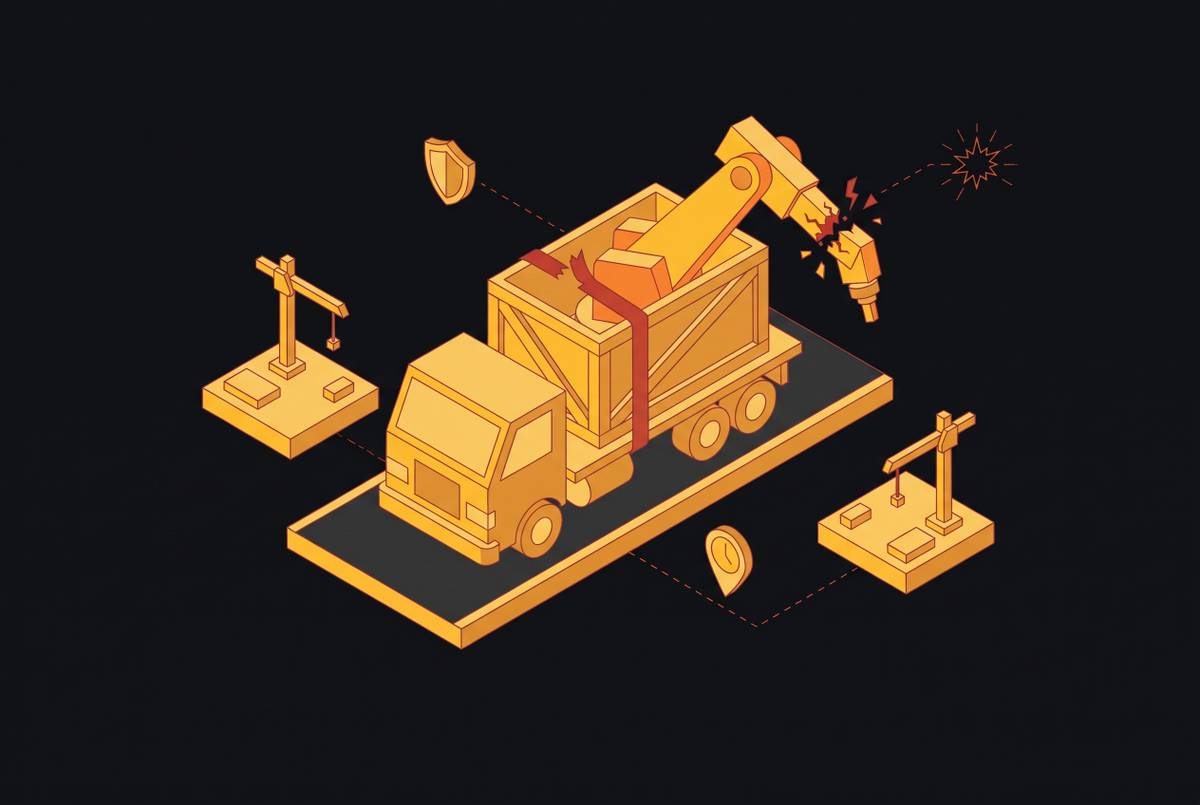
Inland marine coverage for deployed robot fleets covers hardware and equipment on the way between job sites or at customer locations, while liability policies cover harm the robots cause. When GL excludes AI-related losses, the appropriate response is specialist placement that matches both the fleet’s physical exposure and its autonomous operations.
What ISO CG 35 08 and the January 2026 exclusion wave actually did to a standard GL policy
CG 35 08 removes coverage for bodily injury and property damage arising out of generative AI under the products/completed operations liability coverage part. ISO issued it in January 2026 with two other commercial general liability endorsements, CG 40 47 and CG 40 48. For a deployment within that scope, however, attaching the endorsement removes coverage for the resulting injury or damage rather than merely changing how the policy describes it.
The practical change arrives at renewal, often without a premium offset. An operator can therefore retain a GL policy while losing coverage for an exposure central to its business. The distinction is consequential. The existence of the policy does not establish that its coverage grant still reaches the autonomous operation, and a renewal cannot be evaluated solely by comparing limits and premium.
AIFT’s The Insurability Frontier of AI Risk describes the underlying problem as silent-AI exposure, where legacy policies encounter AI-mediated losses without having expressly priced or addressed them. AI may be the instrumentality of a loss without being its named legal cause. That ambiguity accumulated across GL, D&O, cyber, and technology E&O before insurers began expressly excluding it. The January 2026 endorsements formalized that retreat, making visible a mismatch that preceded the renewal notice.
Why underwriters could not price autonomous-system risk inside a standard form in the first place
Physical AI working in the field has too little claims history for underwriters to reliably price autonomous-system exposure inside a standard form. Yet uncertainty about frequency and severity is only part of the difficulty. A robot also combines several potential sources of failure within a single operation, complicating the attribution of liability when something goes wrong.
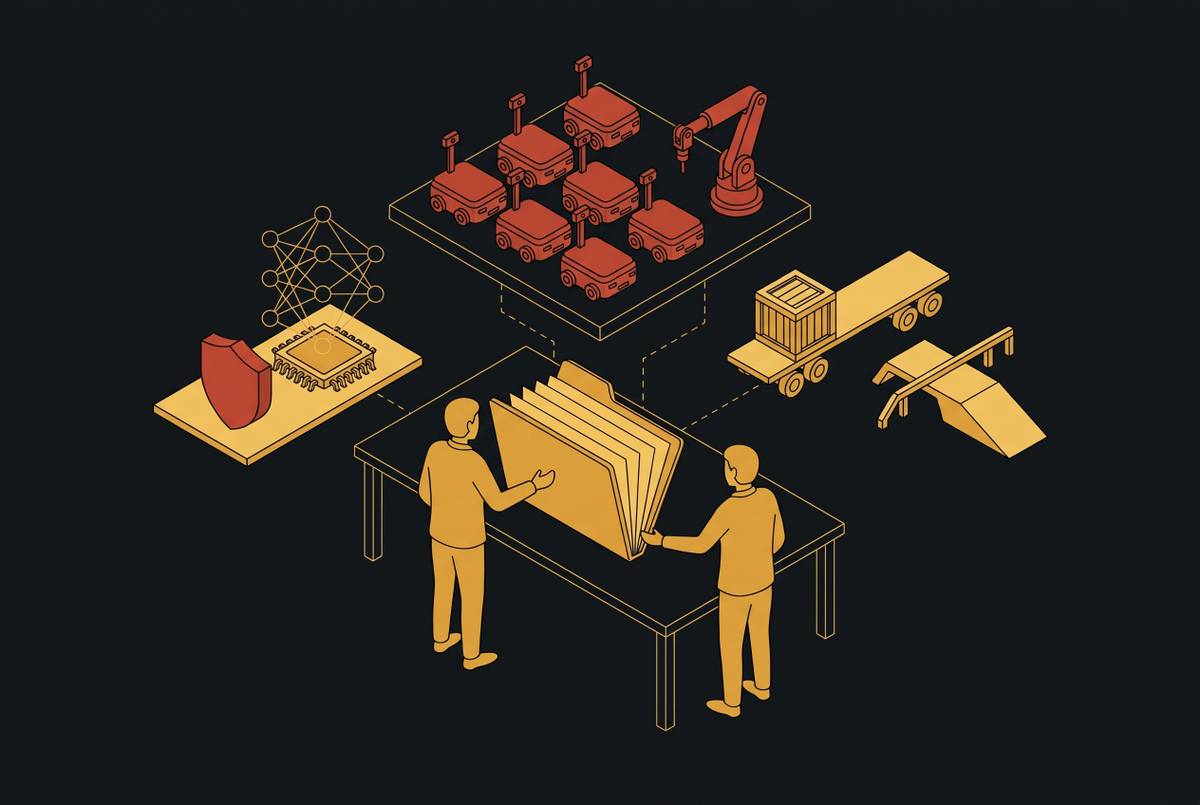
IMA Financial Group’s 2026 analysis identifies the parties that can be involved in one advanced-manufacturing incident, including the hardware manufacturer, robotics or automation vendor, AI or software provider, sensor and vision suppliers, and systems integrator. Contracts divide their duties on paper. They do not necessarily settle which failure caused the loss. A standard GL form was not designed to resolve that chain of responsibility merely because the final consequence was bodily injury or property damage.
The ARC governance paper identifies a further obstacle. The preprint reports safety constraint violation rates of 30% or greater for frontier models under embodiment-specific conditions and describes the absence of certifiable cognitive capability assessment with verifiable attestation. For underwriting, it identifies that demonstrated capability does not provide an independently verifiable boundary for safe behavior. Without that evidence, the underwriter cannot treat an autonomous deployment as an ordinary commercial operation with an unfamiliar piece of equipment. The exclusion is the standard form acknowledging an exposure it was not equipped to price.
What the exclusion is actually telling the operator who reads it carefully
An AI exclusion warrants a broader reading than one removed coverage grant. It signals that the placement may have been constructed for a different risk class, with autonomy treated as incidental. The adjacent policies also require examination. Their names alone do not establish that they address autonomous operations or fit together when one incident produces several kinds of claim.
The AIFT paper maps how an AI-mediated loss can be characterized as a cyber incident, technology error, professional services failure, or products claim. When a robot causes property damage, that can raise questions about which policies will cover it across product liability, technology E&O, cyber, and commercial umbrella. Overlap does not guarantee a response from any line. Standard forms were not drafted around these intersecting descriptions, and an exclusion in one policy does not establish that another will absorb the loss.
Courts and regulators increasingly treat AI-driven failures as the deploying business’s responsibility, while vendor agreements typically cap liability at fees paid over a recent look-back period. Vendor indemnities commonly omit bodily injury, wrongful death, employment discrimination, autonomous action torts, and regulatory penalties. The deployer can consequently face downstream losses far beyond the contractual recovery available from its supplier.
The same review extends to board and investor exposure. An absolute AI exclusion in D&O can remove defense-cost coverage for a securities or investor claim alleging inadequate AI governance. That is a separate consequence from the physical incident. A GL renewal can thus reveal a placement problem reaching from field operations to the board, rather than a single omission that another generic endorsement will repair.
How do you insure a fleet of mobile robots operating across multiple locations?
A purpose-built robotics program separates damage to the fleet from liability arising from its operation. Inland marine and commercial property address hardware, prototypes, and equipment in transit or at customer sites. For robots traveling between job sites, inland marine is the relevant coverage line for the moving equipment. It does not replace coverage for injury or damage the robot causes. The placement must cover the equipment across the locations where it is used, because a policy built around fixed premises cannot be assumed to cover the same exposure.
Commercial general liability addresses third-party bodily injury and property damage under wording that affirmatively covers the autonomous operations being insured. CG 35 08 can remove that protection for losses within its generative-AI scope. Product liability addresses injury or damage caused by a defective robot or component. This includes the situation identified by IMA, where a third-party sensor defect triggers a failure but the claim reaches the company that integrated the system. Component sourcing does not, by itself, remove the integrator’s exposure.
Technology E&O addresses software errors, integration failures, and service downtime. Standard E&O should not be assumed to cover autonomous agent errors, hallucinations, or multi-step decision failures, so AI carve-outs require review before binding. Cyber is also relevant where a breach exposes customer data or an incident is characterized as a cyber loss. These lines serve different functions. Their wording must cover the deployment so that an autonomous decision does not fall outside the scope of both policies.
Commercial umbrella adds excess limits above primary policies, and enterprise and government contracts increasingly ask for proof of that coverage. D&O addresses board and investor exposure, subject to review of any AI exclusion before binding. Neither line substitutes for properly scoped primary coverage.
How insurance requirements buried in customer and government contracts force the coverage question before the policy does
Customer contracts often force the issue before renewal does. Enterprise procurement commonly specifies GL limits, additional insured endorsements, waiver of subrogation, primary and non-contributory wording, and a certificate of insurance. For robotics deployments, contracts often also call for specific product-liability limits and proof of umbrella coverage before a pilot begins. A company can therefore hold a standard GL-centric program and still fail to satisfy the insurance obligations attached to its next deployment.
Contracts with technology vendors often call for cyber liability and technology E&O as well as GL. These obligations address software failures, exposed customer data, and downstream losses associated with autonomous decisions. The contract is asking about more than physical equipment. Pre-binding contract review is therefore essential to matching the proposed policies with both the operational exposure and the customer’s required terms.
Government and defense work adds further complexity. Professional liability or technology E&O, cyber liability, commercial auto for autonomous vehicles, and workers’ compensation are common requirements. Drone and autonomous defense accounts cannot be treated as ordinary drone operators or conventional technology businesses. Underwriting depends on which part of the autonomous system the company touches, so the procurement requirements must be read against that actual role.
Institutional investors often ask for D&O before they provide funding or join the board, while enterprise customers require cyber and E&O at the first MSA. At Series A and beyond, contracts can specify cyber limits above what smaller vendors hold, with umbrella, excess limits, Side A D&O, and multi-state programs following as deployments expand. These obligations arrive before many founders have reviewed their policy wording. These obligations can make the coverage gap visible at procurement, before a claim.
Why the underwriting submission determines whether a specialist policy actually covers the deployment
Submission quality is the operator’s most controllable placement variable. A poor submission to an appropriate specialist carrier can still produce terms that fail to address the actual deployment. The submission must make the autonomous operation legible to the underwriter before the policy language is settled.
Underwriters assess the robot’s function, degree of autonomy, operating environment, deployment scale, safety controls, and testing protocols. They also assess contractual limit requirements, claims history, revenue, and how central AI is to the business model. These factors distinguish the account from an ordinary commercial submission. A description that presents the company merely as a technology vendor does not answer the questions raised by machines performing tasks in the field.
The ARC paper separates governance into model-level safety validation, independent system-level assessment, and site-specific operational authorization. Evidence about the model does not, on its own, establish the integrated system’s capability or its authorization to perform a particular task at a particular site. A submission that addresses all three levels gives a specialist underwriter more than a general assertion that the robot has been tested.
These underwriting questions are functioning as de facto performance standards ahead of settled regulation. A submission that cannot answer them leaves the underwriter without evidence of the controls relevant to the exposure. Missing evidence prevents those controls from supporting the proposed terms.
What a specialist broker actually does differently and why it costs nothing beyond the premium
A specialist broker turns operational evidence into a placement. The work begins with the robot’s function, autonomy, environment, safety validation, and governance documentation rather than relying on generic ACORD forms designed for businesses without machines in the field. The broker then directs that submission to carriers whose forms affirmatively address autonomous-system liability. Access alone is not the distinction. The submission and the proposed wording must describe the same risk.
Before binding, a licensed broker checks that the policy covers the operations described in the submission and looks for exclusions that remove the expected protection. This is especially important when public descriptions suggest affirmative AI coverage. The AIFT paper distinguishes specialist market positioning across Lloyd’s and specialty carriers by mapping their public statements. Public positioning can identify a potential market. It cannot establish what a particular policy will pay.
Broker commissions are built into the premium regardless of which broker places the policy. Using a specialist therefore directs that commission toward preparation and placement suited to autonomous operations at no cost beyond the premium. The cost structure provides no reason to postpone the coverage review.
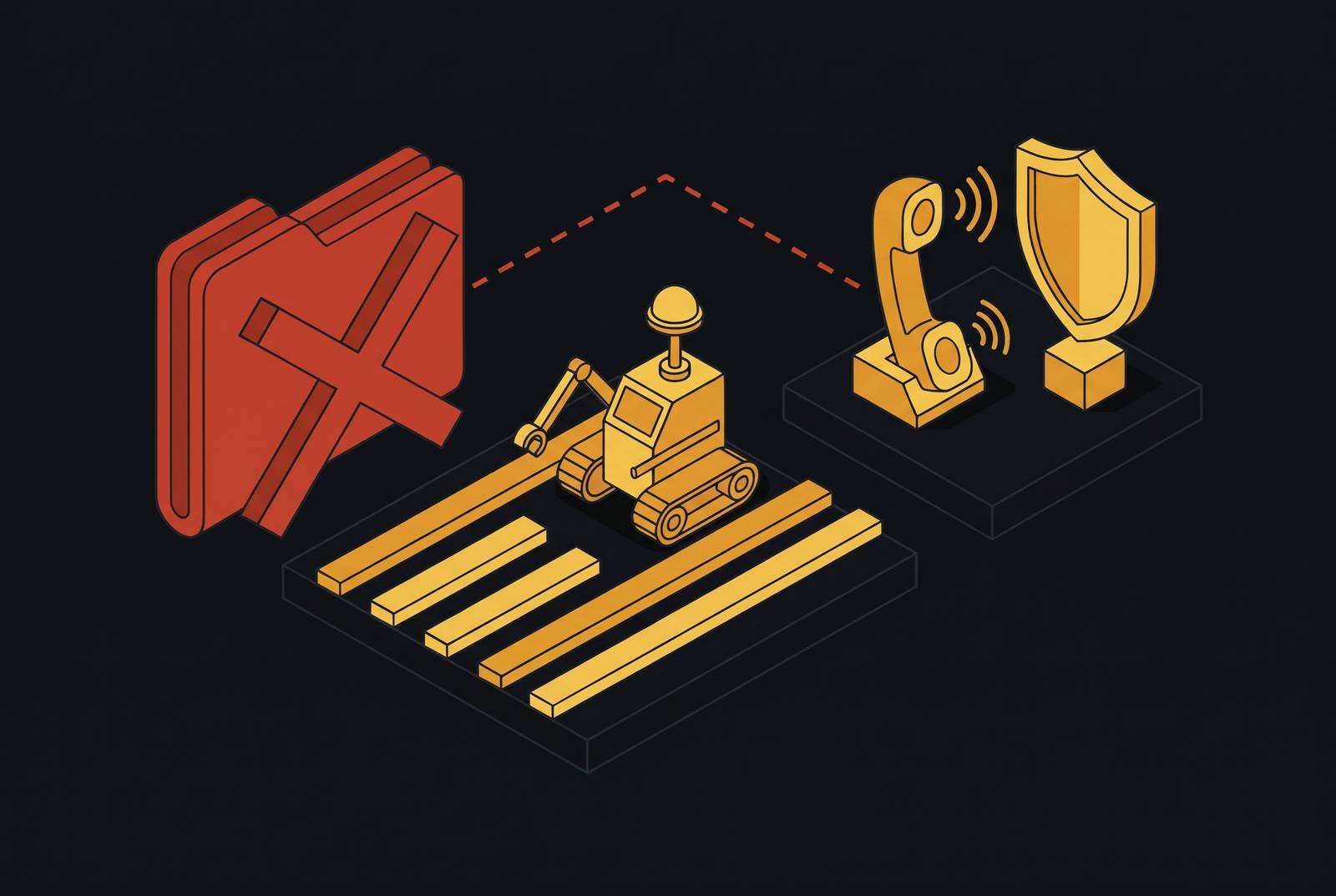
The GL exclusion is the clearest trigger for that review because it puts the mismatch in writing. The appropriate response is a specialist placement process before a claim tests the assumptions behind the existing program. For a deployed fleet, the desired outcome is concrete. The operator should know which policy protects robots in transit and at customer sites, which policies address harm from autonomous operation, and whether the bound wording matches the deployment actually taking place.