The Carrier Submission Details a Robotics Hardware Company Must Resolve With a Specialist Broker Before Any Field Deployment Binds
Five submission details decide whether a robot's first deployment gets covered.
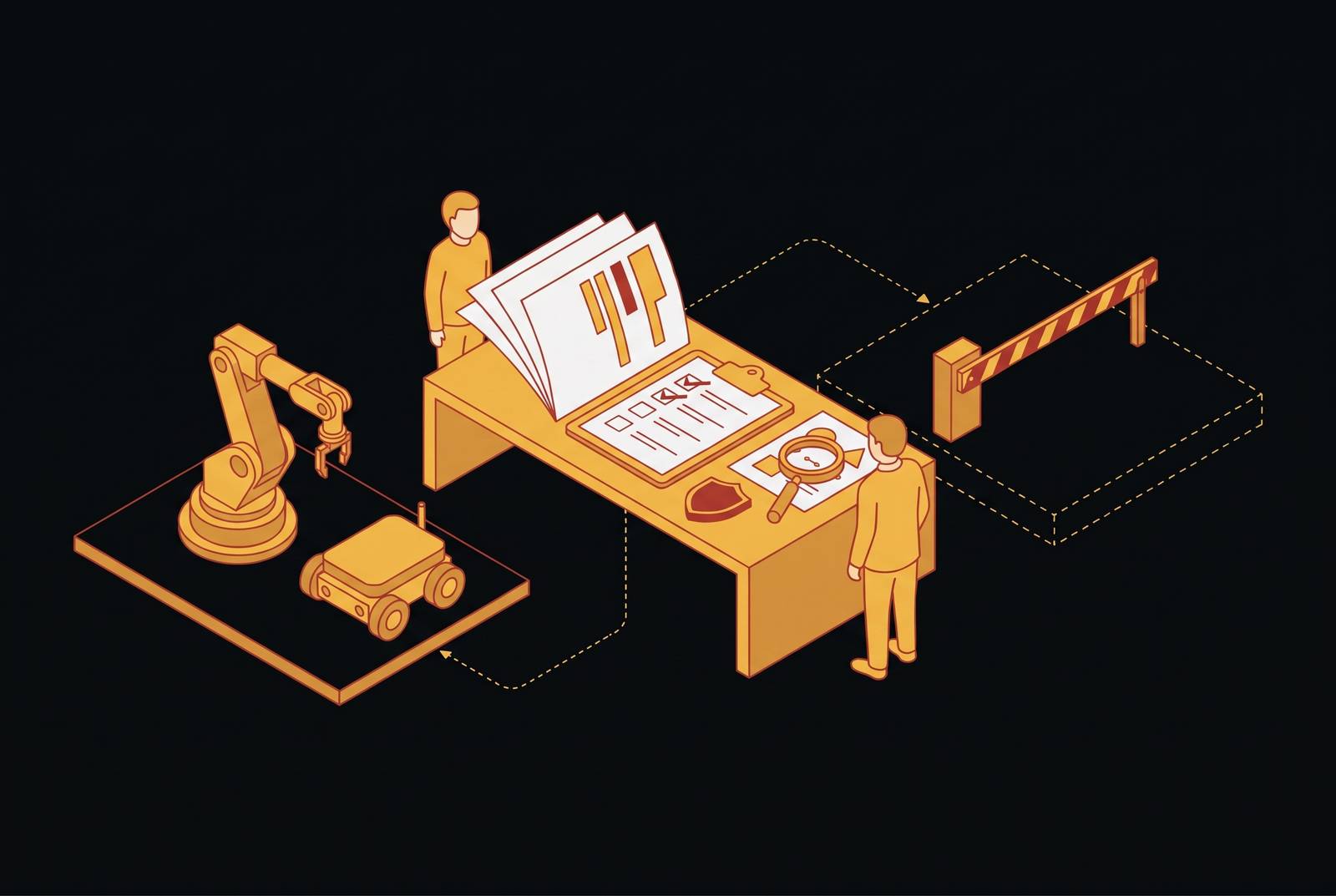
An insurance broker for autonomous systems and robotics companies must resolve the deployment’s architecture, operating environment, liability allocation, software changes, and claims evidence with the carrier before coverage binds. Pre-revenue autonomous vehicle and drone startups that need liability coverage before launch need more than a generic policy. The submission must describe the system as it is, and the policy must cover how it will be used.
Why doesn’t a robotics hardware company’s standard insurance stack cover its first field deployment?
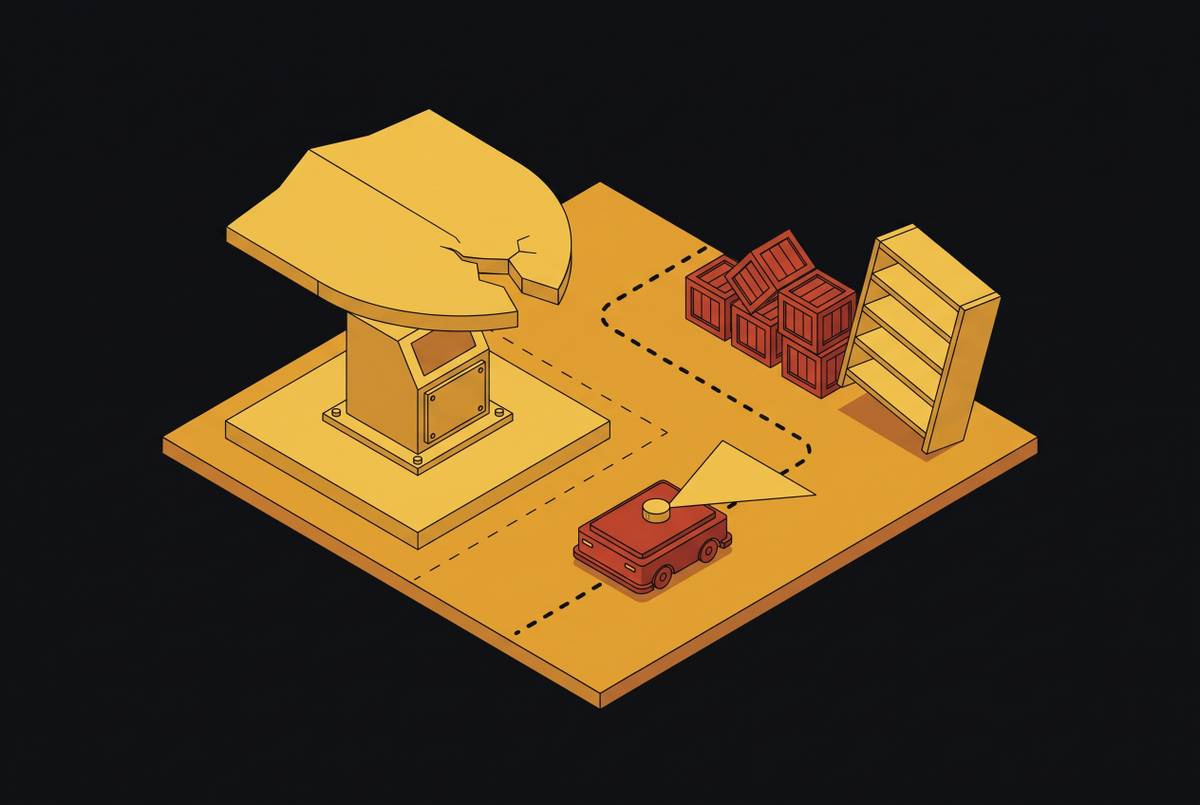
Standard commercial policies rest on actuarial models built for deterministic machines, including PLCs, relays, and hydraulic systems. Those models do not account for AI-based failure modes such as neural network misclassification, adversarial inputs, or emergent fleet behaviors. A commercial general liability policy that covered warehouse equipment does not automatically cover an autonomous robot operating in the same warehouse. The location may be unchanged while the mechanism of harm is entirely different.
A miscalibrated perception model, a control-state error during an update, or a cyberattack that redirects actuators can turn a software problem into an injury claim. WTW’s physical AI analysis notes that OSHA guidance identifies programming, testing, and maintenance as settings where robots may activate unexpectedly because of control or state-management errors. Testing can heighten that risk when safety mechanisms are temporarily bypassed. A submission confined to normal production operations therefore leaves part of the exposure unexplained.
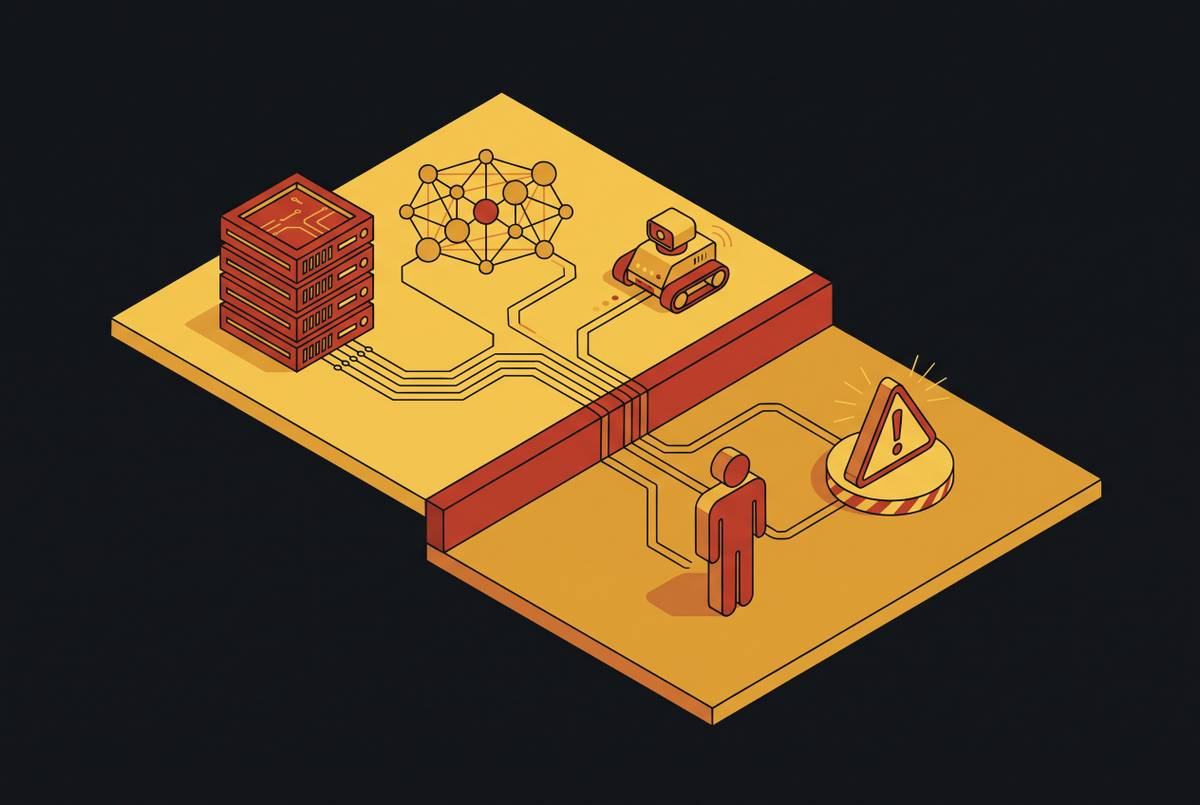
These incidents also cross traditional insurance boundaries. One event may implicate general liability, product liability, cyber, and technology errors and omissions coverage, while exclusions leave gaps between them. The existence of each policy does not establish that their terms fit together. Nor does a familiar description such as “warehouse operations” explain how software causes physical loss. The solution is not simply more policies, but a submission process that resolves ambiguity before the policy binds.
How liability actually distributes across a robotics incident — and why that determines what a submission must say
WTW’s warehouse example makes the distribution of liability concrete. A humanoid robot drops a heavy box on a contractor, potentially exposing the manufacturer for a design flaw, the software developer for an algorithm that misjudges balance, the operator for inadequate safety procedures, and the maintenance provider for a failed sensor. Several parties may face claims at once. Across a robotics deployment, the system integrator may also have its own exposure. Each party’s coverage must therefore be clear before the system starts operating.
The carrier needs to know who indemnifies whom, which parties require additional insured status, and which policy is expected to respond first. These are not interchangeable protections. A deployment or robotics-as-a-service agreement that leaves liability caps, software-update responsibility, and supervision obligations unresolved leaves the company exposed to losses without a clear contractual allocation. The submission must make those obligations visible rather than treating the robot as a standalone product.
Regulatory distinctions reinforce the need for precision. Europe’s Product Liability Directive and AI Act operate in parallel, with primary manufacturer or provider liability under the former and separate operational obligations for deployers under the latter. Deployers may take on manufacturer-equivalent liability if they make substantial changes to an AI system. In the US, Texas and Arizona allow companies, as vehicle owners or authorization holders, to receive traffic citations for autonomous-system violations. The scope of those provisions is limited to citations. Underwriters need the actual liability map reflected in the submission, because silence forces them to assume the worst rather than credit protections the company has not documented.
The five submission dimensions a specialist broker must resolve with the carrier before the policy binds
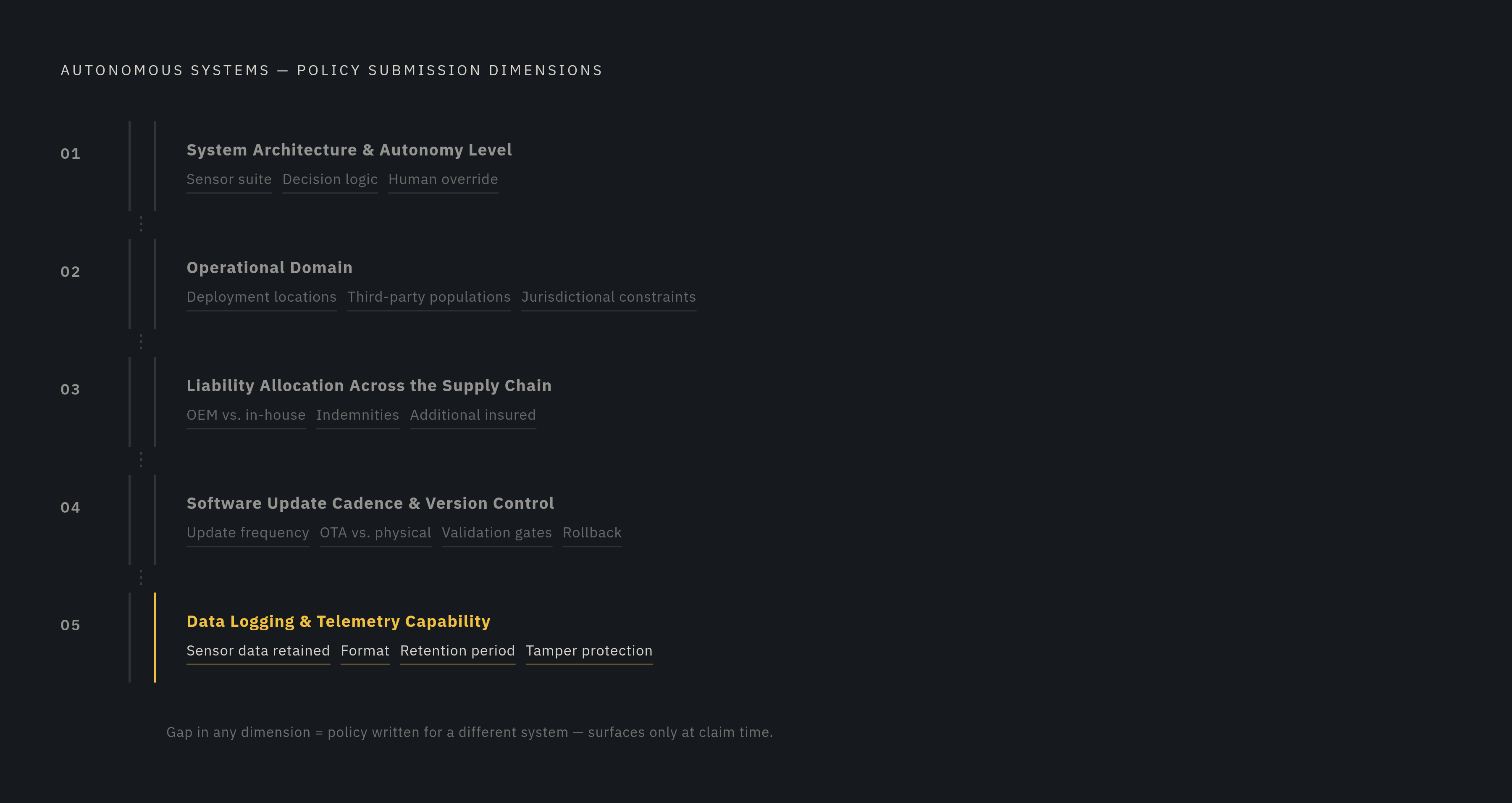
System architecture and autonomy level must describe how the robot makes decisions and when a person intervenes. The carrier needs to know whether a system is fully autonomous, supervised-autonomous, or teleoperated because each has different failure modes and liability theories. “Semi-autonomous” is not a sufficient operating description. The submission must identify the sensor suite, including lidar, radar, cameras, and IMUs where applicable, together with edge versus cloud decision-making, the AI model type, and the ability to receive remote commands during operation. If the system uses a Vision-Language-Action model, that belongs in the description. Human override requirements must say both that oversight is in place and when a person must step in.
Operational domain must identify where the system will work and whom it will encounter. A controlled warehouse, public road, hospital corridor, construction site, and private residence present different third-party exposures. WTW’s analysis compares traditional industrial robots that work in controlled environments with humanoid robots built to work near people in factories, hospitals, homes, and public spaces. The submission must name deployment locations, distinguish workers from members of the public or vulnerable populations, and state geographic or jurisdictional constraints. That specificity also supports contract compliance, because a certificate describing warehouse operations does not satisfy a hospital deployment requirement.
Liability allocation across the supply chain must distinguish what the company builds from what it integrates. Third-party sensors, AI models, and operating platforms come with obligations that a generic product description leaves unexplained. The submission must identify OEM and in-house components, upstream warranties and indemnities, and indemnities granted to customers or site owners. It must also anticipate additional insured requirements so that the carrier can provide blanket additional insured language covering those obligations. If a component defect causes harm, the claim may reach whichever party the customer can pursue first, so silence about supplier responsibility invites protective exclusions.
Software update cadence and version control must explain how the insured system changes after the policy binds. A fleet underwritten on one set of decision logic may operate on another after an update. Version control is therefore an underwriting concern. The submission must state update frequency, whether releases arrive over the air or require physical access, which validation and regression tests gate deployment, and whether rollback is available. A mid-term model change may fall outside the described risk if the carrier has not agreed how changes will be handled. Specialist brokers resolve that uncertainty by negotiating notification obligations and update-reporting windows into the policy at bind.
Data logging and telemetry capability must establish how an incident can be reconstructed. Carriers increasingly require evidence of auditable, high-fidelity logs because an unexplained failure is difficult to price and adjudicate. The submission must specify which sensor data is retained, including applicable lidar, radar, camera, IMU, and joint-torque data, as well as the logging format, retention period, protection against tampering, and process for producing records during a claim. These details connect directly to the warehouse liability map by supporting an assessment of what failed and whose responsibility was involved. If the logging cannot be trusted, the company may face absolute AI exclusions or premiums based on what could go wrong in the worst case.
The coverage lines a robotics submission must coordinate — and the gaps that appear when they are placed independently
General liability and product liability address bodily injury and property damage arising from robotic operations and manufacturing or design defects, respectively. Technology errors and omissions coverage addresses financial loss from software errors and service failures. The boundary between them needs explicit attention. Standard tech E&O typically excludes bodily injury and property damage, even though those are precisely the consequences a robot’s software can cause. Unless the broker coordinates those terms with general and product liability, a software-caused injury can fall between policies.
Inland marine or an equipment floater follows machines to job sites, pilots, demonstrations, and customer locations, where standard premises-based property coverage may not apply. Cyber coverage introduces another boundary to resolve. A compromised robot may lose data, disrupt operations, damage property, or injure people. The submission must therefore describe network security and the consequences of compromise, allowing the carrier to assess cyber exposure together with the robot’s operational and physical risks.
Umbrella coverage supplies excess limits when enterprise or government contracts require more than the primary policy provides. Those requirements belong in the placement from the outset. Otherwise, the program may describe the right operations but still fall short of the customer’s required limit before a pilot. Directors and officers coverage is also relevant to venture-backed companies and addresses governance. The field-deployment program depends on coordinating general liability, product liability, tech E&O, inland marine, cyber, and umbrella terms.
Different underwriters, carriers, and forms may interpret the same system differently, particularly when AI exclusions are involved. An exclusion in one policy can remove an expected part of the combined response. The five submission dimensions provide the common description against which each policy must be read. The specialist broker’s task is to reconcile those terms so that separate underwriting decisions do not leave an incident uncovered between lines.
What enterprise and government customer contracts require before a robot can enter the field
Customer contracts turn coverage design into a condition of access. Enterprise and government deployment agreements commonly require general liability with the site owner named as an additional insured, workers’ compensation for on-site staff, evidence of equipment coverage for machines left on the premises, and sometimes umbrella or excess limits. A generic policy does not establish compliance. The submission must anticipate the required endorsements, locations, activities, and limits so that the insurance evidence corresponds to the deployment the customer has approved.
Indemnity wording adds a separate contractual test. Enterprise customers increasingly specify autonomous-system failures rather than relying only on general intellectual-property or data indemnities. A clause suitable for a software product may not address a robot operating inside a facility. Government contractors must also comply with AI and autonomy policies, and failure to do so may have consequences under the False Claims Act or for export controls and supply chain integrity. The submission must reflect that compliance posture as well as the machine’s specifications, because the deployment obligations extend beyond how the hardware functions.
Autonomy placements take longer than standard placements because fewer carriers have an appetite for the risk. A missing certificate can delay the pilot itself. That delay creates commercial and reputational costs even when the robot is ready to operate. The practical rule is to buy coverage before the pilot is scheduled, with the submission already reflecting the customer’s specific requirements.
Why submission quality determines whether the coverage that binds actually responds to the claim
The submission establishes the risk the carrier is asked to insure, while the resulting policy determines the coverage provided. An incomplete submission can produce terms written for a different system or use. That mismatch may become apparent only when an incident tests the policy’s coverage. Incomplete, inconsistent, or difficult-to-interpret information also generates repeated underwriting queries, slows placement, and creates problems in claims and renewals. For robotics, those flaws in the information affect coverage quality because they make it harder to see how software behavior, physical harm, and responsibility under the contract are linked.
Records of AI governance, safety culture, and deterministic safeguards can help the company get better terms and lower premiums. Silence forfeits that basis for underwriting judgment. The company must keep providing clear information after the initial placement, since a material software change can change the risk during the policy term. An agreed notification protocol makes that change part of the coverage relationship rather than an unresolved question raised during a claim.
A lower premium on a generic form is not a substitute for a submission that describes the actual system and a policy that matches it. Founders do not need to become insurance experts to supply a plain-English account of how their robots operate, change, and interact with people. The specialist converts that account into a carrier-ready submission, and a licensed broker reads the final policy before binding to identify what was lost or narrowed in translation. Submission quality is the foundation of responsive coverage, and specialist broking is the mechanism that produces it.