AI Liability Insurance: What It Covers and Where Standard Policies Stop
Most commercial policies were written before anyone asked whether they covered AI. Here is which lines respond to an AI loss now, where the exclusions sit, and how to buy cover that names the risk.
The short answer
AI liability insurance is the cover that pays when an AI system you build or use harms someone else: a hallucinated answer a customer relies on, a model that discriminates, an agent that deletes or sends what it shouldn't, or a machine that injures someone. It is rarely one policy. For most companies it is technology E&O (or professional liability) for financial loss from a bad output, cyber for security and data events, general and product liability for bodily injury and property damage, and D&O for claims about how the business governs AI, with an affirmative AI endorsement or a standalone AI liability product where those lines leave gaps.
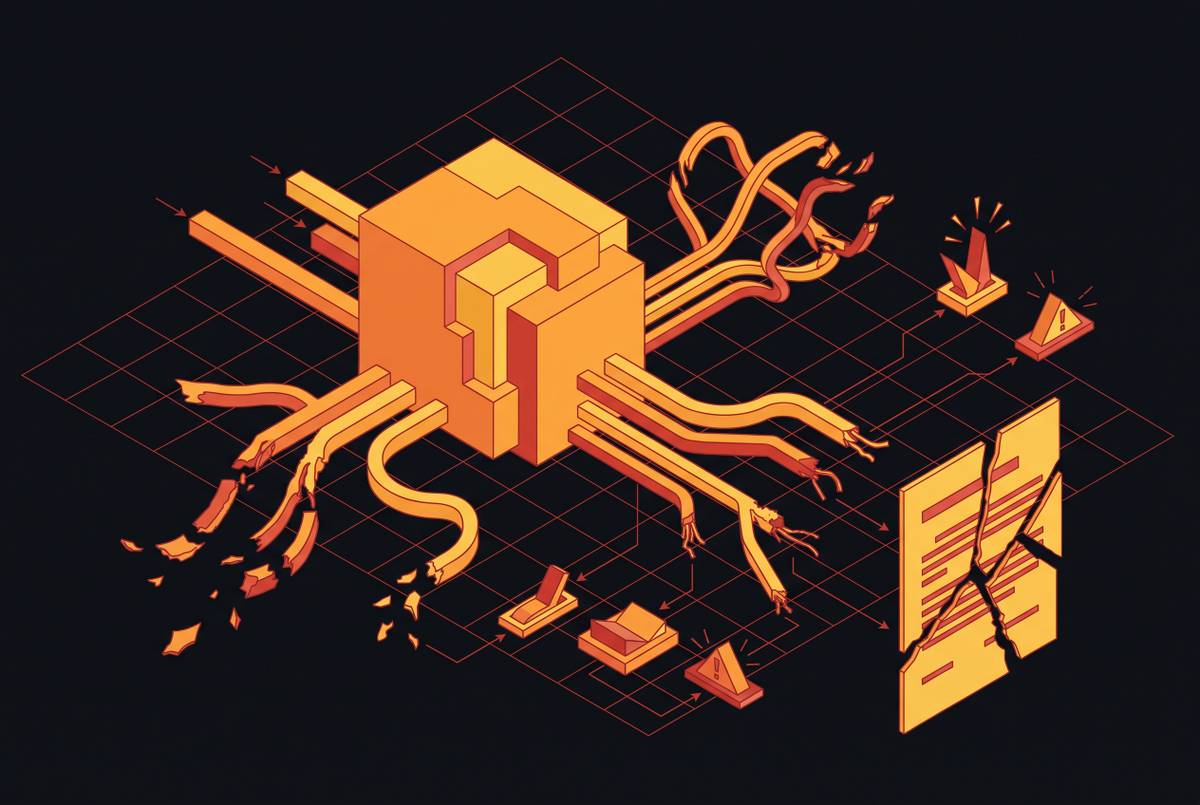
The reason this needs its own guide is that the policies most companies already hold are being rewritten around AI. Silence about AI used to leave room to argue for coverage. Since 2025 carriers have been closing that silence with exclusions, sublimits and narrower definitions, often at renewal with no change in premium, while a smaller affirmative market names AI risk and covers it on purpose. Which side of that line you land on is decided by the wording of your own policies.
Who this guide is for
- AI software companies whose model, agent or AI feature is the product they sell to businesses.
- Companies that deploy a vendor's AI tools to serve their own customers or run their own operations, including through agents with access to real systems.
- Professional firms (law, accounting, architecture, healthcare and others) whose people use AI to produce work that clients rely on.
- Founders and finance leads facing an enterprise or government contract that asks for proof of Tech E&O and cyber before signing.
The policies that make up AI liability cover
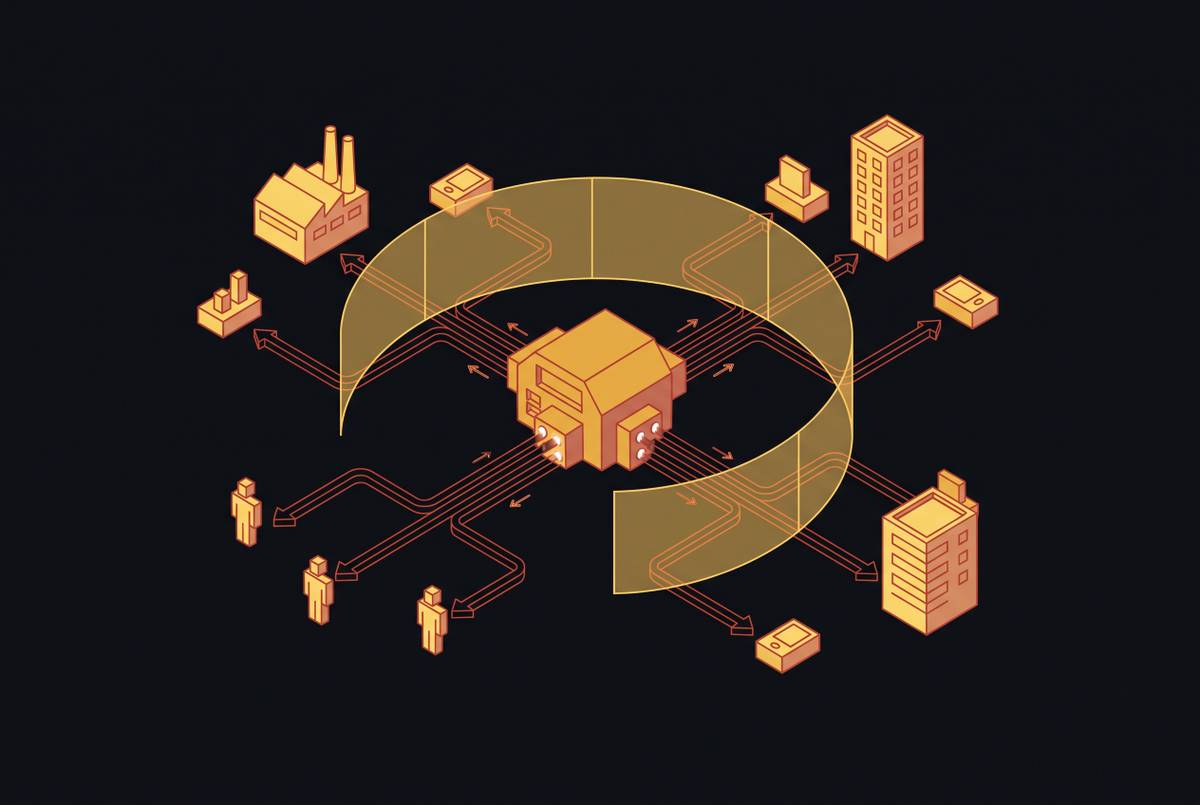
Each line was built for a different kind of loss. An AI incident often touches several at once, and the gaps between them are where AI claims go unpaid.
Technology errors and omissions (Tech E&O)
Covers: Claims that your technology product or service failed and cost a customer money, including an AI output a customer relied on to its financial or regulatory detriment. It is the line most directly tied to an AI product that doesn't work as promised.
Watch for: Wording drafted for reproducible software bugs may not reach hallucinations, model drift or bias unless it names them. It is claims-made, so the retroactive date has to reach every model version still in production. It usually excludes bodily injury, and it is written for technology providers: a company that only uses a vendor's AI may find its own Tech E&O doesn't respond.
Professional liability (E&O) for other professions
Covers: Negligence claims when a professional's work harms a client, which now includes work produced with AI that wasn't adequately checked, such as filings with fabricated citations.
Watch for: Broad AI exclusion language has been spreading into E&O forms held by architects, medical facilities and other professions, and some carriers have written broad AI exclusions into professional liability since 2024.
Read: Hallucination Losses and Professional Liability Triggers
Cyber liability
Covers: Security, privacy, extortion and data events, including attacks on or through AI systems such as prompt injection, data poisoning or hijacked AI accounts.
Watch for: AI sublimits that cap an AI-related loss at a fraction of the headline limit (some carriers near ten percent, and sublimits as low as $250,000 on multi-million-dollar policies), and “security failure” definitions that require an outside attacker, which an authorized agent acting on its own may not meet.
Read: Sublimits and Carve-Outs for AI Outputs in Cyber and E&O Bundles
Commercial general liability (CGL)
Covers: Bodily injury, property damage and personal and advertising injury to third parties, such as defamation or physical harm.
Watch for: ISO's generative AI exclusion endorsements, available from January 1, 2026: CG 40 47 removes all three coverages where the claim arises out of generative AI, CG 40 48 removes only personal and advertising injury, and CG 35 08 applies to products and completed operations.
Directors and officers (D&O)
Covers: Claims against directors and officers over how the company governs, discloses and oversees its use of AI, including securities claims after an AI incident.
Watch for: Absolute AI exclusions such as W. R. Berkley's, which reaches anything “based upon, arising out of, or attributable to” the actual or alleged use, deployment or development of AI, including inadequate AI policies and failure to detect AI-generated content.
Affirmative AI endorsements and standalone AI liability
Covers: Cover that names AI exposures on purpose: hallucinations, AI-generated content, model drift, AI-caused security failures, deepfake fraud, or bodily injury and property damage arising from AI use, depending on the product.
Watch for: Each product names specific perils and comes with conditions. An endorsement on top of a cyber or E&O policy still sits on that policy's own triggers and exclusions, so read what it names and what it leaves out.
Read: Sublimits and Carve-Outs for AI Outputs in Cyber and E&O Bundles
Performance-based AI cover
Covers: Losses when a model underperforms against a defined measure, such as prediction errors or data drift, rather than when someone sues.
Watch for: It works differently from occurrence or claims-made forms, so the contract's definition of performance decides what pays.
Why your existing policies may no longer cover AI
Policies written before generative AI became part of everyday work said nothing about it either way. That silence worked in policyholders' favour: an AI-related claim could fall within existing coverage because it met the policy's terms and nothing excluded it. The industry calls this silent AI, and carriers are ending it.
The clearest marker is ISO, whose forms most of the U.S. commercial market builds on. Its three generative AI endorsements became available for CGL policies on January 1, 2026, and they define generative AI broadly, as a machine-based system trained on data that can create content or responses, including text, images, audio, video or code. Their operative phrase is “arising out of”, which is read broadly: AI need not be the main cause of the loss for the exclusion to apply. Beyond CGL, W. R. Berkley has filed an absolute AI exclusion for D&O, E&O and fiduciary liability, and Berkshire Hathaway, Chubb and Travelers sought state approval to exclude AI-related damages, most of which regulators approved.
None of this needs the policyholder to agree to anything. These changes arrive in the renewal paperwork, sometimes with the premium unchanged, and a company whose broker didn't flag them may only find out when a claim is declined. Early industry reporting found that about one in five insurance professionals said a client had an AI-related loss in 2025, and only about half of those losses were fully covered.
Building AI or using it: why the cover differs
An AI vendor and a company that deploys the vendor's tool face the same incident from different positions. The vendor sells a technology product, so Tech E&O is the natural home for a claim that its model failed a customer, and enterprise buyers increasingly expect vendors to carry Tech E&O, cyber and D&O cover built around model errors, hallucinations, training data IP and agent actions.
The deployer is often in a weaker spot. Its own Tech E&O, if it has one, was underwritten around it providing technology, not buying it. Vendor contracts typically push liability for outputs onto the deployer, on the logic that it reviewed the output before it reached anyone, and a professional firm that delivers unchecked AI work carries the malpractice claim itself. For a deployer, the questions are whether its professional liability or E&O still responds to AI-assisted work, whether its CGL now carries a generative AI exclusion, and whether a standalone AI liability product would close what is left.
Agentic systems add a further problem. An agent that uses authorized access to delete, send or transact may produce a loss that is neither a professional error nor a cyber intrusion under the policies' definitions, and each policy may point to another. For a company putting agents into production, the trigger wording matters as much as the limit.
What to check at your next renewal
Most AI coverage gaps can be found before a loss, if someone reads the renewal wording against how the company actually uses AI. Ask your broker for written answers to each of these.
- Endorsements: is CG 40 47, CG 40 48 or CG 35 08 attached to any CGL policy, or a carrier's own AI wording instead? Get the exact text.
- Professional lines: compare the expiring and renewal wording of your E&O, D&O and fiduciary policies for new AI exclusions, rather than assuming the policy name means continuity.
- Sublimits: what is the AI sublimit on your cyber policy, what else reduces it, and how does it compare with a realistic AI loss after your latest product change or contract?
- Triggers: for agents with system access, does the cyber policy's security failure definition require an outside attacker? Does “professional services” assume human judgment?
- Named perils: does your Tech E&O or affirmative endorsement name hallucinations, AI-generated content, model drift and bias, or leave them to argument?
- Claims-made terms: does the retroactive date cover every model version still in production, and is there a duty to defend or only reimbursement of defense costs from the same limit?
- Correlated failure: is there a carve-out for widespread losses caused by one upstream model provider, if your product runs on a widely used foundation model?
- Buy-back: can an excluded coverage be bought back by endorsement, or placed more cleanly through a standalone AI product?
Who offers affirmative AI coverage
Alongside the exclusions, a market that names AI risk on purpose is forming, sorted by peril rather than offering one product for everything. Examples from public materials: CFC revised its policy suite in June 2026 to name model hallucinations, AI-generated content and model drift across seven product lines including technology E&O and cyber. Beazley added an affirmative AI endorsement inside cyber and technology E&O on September 17, 2026. Coalition added an affirmative AI endorsement to its cyber policies in 2024, covering AI-caused security failures and deepfake funds-transfer fraud, and AXA XL added a GenAI endorsement to its CyberRiskConnect policy in October 2024.
Standalone and specialist products exist too. Munich Re's aiSure uses performance-based triggers for prediction errors and drift. HSB, part of Munich Re, introduced AI liability insurance for small businesses in March 2026, covering bodily injury, property damage and advertising injury arising from AI use. Chaucer and Armilla's Vanguard AI combines cyber and Tech E&O with a standalone AI liability component, and Google Cloud has partnered with Beazley, Chubb and Munich Re on cyber insurance with affirmative AI coverage for its cloud customers. For AI that controls physical machines, purpose-built autonomous systems programs such as Axis's robotics cover address injury, damage and downtime from navigation or perception failures.
Product names, scope and availability change quickly. Check the current wording and eligibility with the carrier or a broker before relying on any of them, and expect to need more than one product: no single carrier covers the full range of AI loss.
Vendor indemnities and customer contracts
Contracts decide who carries an AI loss before any policy is read. On the buying side, most AI vendor agreements cap total liability, indemnities included, at around 12 to 24 months of fees, and no major vendor indemnifies factual errors in outputs. IP indemnities that do exist can be voided if the output is modified, and they usually run to the vendor's direct customer, so a buyer whose vendor holds the model-provider account needs a pass-through in its own agreement. Being named an additional insured on a vendor's policy only helps as far as that policy covers AI.
On the selling side, enterprise customers commonly require Tech E&O and cyber, with per-occurrence limits typically in the low millions, and government contracts can require more. Read each contract's insurance clause for the exact figures. A certificate of insurance shows those policies and limits, not their AI exclusions, so a company can satisfy the certificate and still have no cover for the AI claim the work could produce. Promises such as “error-free” or “will not hallucinate” create liability no insurer agreed to take on.
What underwriters ask for
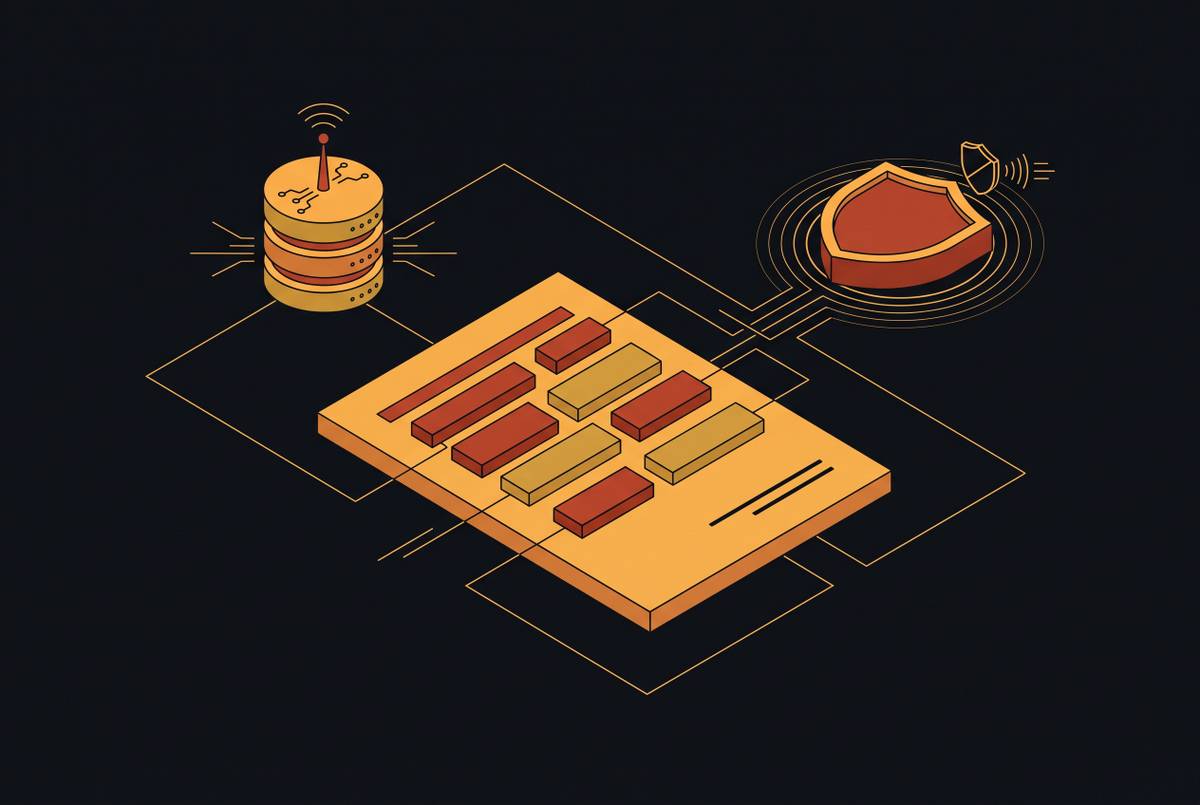
Affirmative AI cover is priced from evidence. Underwriters look for a record they can evaluate: an inventory of models and AI tools, a map of which consequential decisions have a human in the loop, documented human override, data provenance, adversarial testing, incident response and rollback, a named accountable executive, and for agentic or physical systems, proof of deterministic safeguards that stop runaway actions. Companies running on a widely used foundation model should document their model dependencies, fallbacks and drift monitoring.
A company that can't show its controls can expect a higher premium, broader exclusions or a decline, while one with a usable record gives the underwriter a basis for naming the risk rather than excluding it.
How much AI liability insurance costs, and where to buy it
There is no published price list. Premiums are quoted per company and depend on what the AI does, who relies on it, the limits your contracts require and the quality of the underwriting submission. To compare, get quotes on the same submission and compare the endorsements, sublimits and definitions, not just the premium.
Because the difference between covered and excluded now sits in endorsement wording, the broker matters. A generalist placing standard forms may not notice an AI exclusion added at renewal; a broker who specialises in technology and AI risk reads the wording before it binds and knows which carriers are writing affirmative AI cover. Broker commission is built into the premium either way.
Frequently asked questions
What is AI liability insurance?
AI liability insurance is the cover a company uses for claims when an AI system it builds or uses harms someone: financial loss from a wrong output, discrimination, an agent's unintended action, a security event, or physical injury and damage. It is usually a combination of Tech E&O or professional liability, cyber, general liability and D&O, plus an affirmative AI endorsement or standalone AI product where those lines exclude or cap AI losses.
Does Tech E&O cover AI hallucinations?
It can, if the wording reaches them. Tech E&O is the line for financial loss caused by a technology product's failure, but older wording was drafted for reproducible software errors, and some carriers now exclude AI or cap it. Look for wording that names hallucinations, AI-generated content and model drift, as some carriers' policies now do.
Does general liability cover AI?
Less and less. Since January 1, 2026, insurers can attach ISO endorsements that exclude bodily injury, property damage and personal and advertising injury arising out of generative AI, and some carriers use their own broader wording. Whether your CGL covers an AI-related claim depends on the endorsements attached to your policy.
Do I need AI liability insurance if I only use AI tools, not build them?
Often, yes. Vendor contracts typically place responsibility for outputs on the company that deploys the tool, cap the vendor's liability at around a year or two of fees, and don't indemnify factual errors. Your own Tech E&O may not respond if you aren't providing technology, and your CGL or professional liability may now exclude AI. Check each policy's wording for how it treats AI use.
How much does AI liability insurance cost?
There is no standard rate. Premiums depend on how the company builds or uses AI, the harm it could cause, the limits contracts require and the governance evidence in the submission. Ask a broker for quotes on the same submission and compare exclusions and sublimits as well as price.
This guide explains how coverage lines generally work. It is not advice on any particular policy: what pays is decided by your policy's own wording and endorsements, so read them with a licensed broker.